

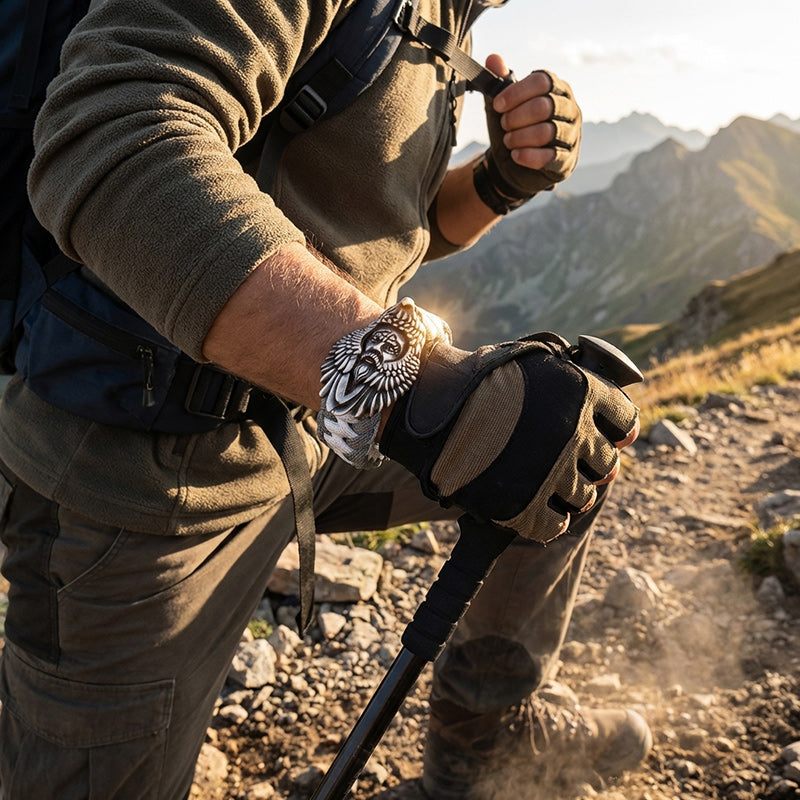
550 Paracord survival bracelet — built for the trail, ready for anything

550 Paracord vs Leather Bracelets: Which Lasts Longer?

You've got $40 to spend on a bracelet that means something. Not just something that looks good — something that actually does something. So you narrow it down to two contenders: a hand-woven 550 paracord survival bracelet, or a polished leather cuff.

Here's the honest comparison — no marketing fluff.

The Short Answer

550 paracord bracelets win on durability and versatility. Leather wins on aesthetics and comfort straight out of the box. The right choice depends entirely on how you live.

Keep reading for the full breakdown.

What Is 550 Paracord, Anyway?

Before we compare, let's be clear on what "550 paracord" actually means.

550 paracord — also called Type III paracord — is a nylon rope originally used in military parachute lines. The "550" refers to its minimum breaking strength: 550 pounds of tensile load. Inside the outer sheath are 7 inner strands, each made of multiple smaller fibers. That's not marketing language. That's engineered redundancy.

When woven into a bracelet, a single piece of 550 paracord gives you 8 to 10 feet of usable cord that can be unraveled in seconds for emergencies.

A leather bracelet, by contrast, is typically a single piece of tanned hide with decorative stitching. It does not convert into anything else. It is what it is.

Durability: The Head-to-Head

Paracord Bracelets

  • Water-resistant: Nylon doesn't absorb water. It'll get wet, dry out, and keep its shape. Leather rots.
  • UV-resistant: Sun exposure doesn't degrade paracord the way it cracks and fades leather.
  • Temperature-tolerant: Works in -20°F winters and 130°F desert heat without degrading.
  • Tensile strength: 550 lbs. You can actually use it for real tasks — building a shelter, securing gear, emergency repairs.

Real-world test: A paracord bracelet caught on a rock while rappelling. The wearer used the unraveled cord to build an emergency anchor point and descended safely. A leather bracelet would have simply snapped at the clasp under far less load.

Leather Bracelets

  • Cracks over time: Leather dries out, especially with repeated water exposure and sun. Requires conditioning every few months.
  • Absorbs sweat: Over time, body oils and sweat can stain and weaken the fibers.
  • Sewing thread fails first: Most leather bracelets are held together by decorative stitching, not the leather itself. When that thread breaks, the bracelet unravels.
  • Not designed for load-bearing: You're not hanging a shelter from your leather cuff.

Winner: Paracord, decisively. It's not even a close contest on durability.

Maintenance: What Each Requires

Paracord Bracelet Leather Bracelet
Cleaning Hand wash in warm water, air dry Leather cleaner + conditioner
Water exposure No problem Can cause staining and warping
Shed maintenance None Conditioning every 2-3 months
Clasp care Rinse buckle, check spring mechanism Check stitching integrity
Lifespan Years of daily wear, even in harsh conditions 1-3 years depending on care

Paracord is essentially set-it-and-forget-it. Leather requires ongoing maintenance to look and perform its best.

Comfort: The Hidden Factor

Here's where leather sometimes fights back.

Leather softens and molds to your wrist over time. After a few weeks of wear, it fits like a second skin. Paracord, being a braided rope, has a rougher texture initially and can feel scratchy against bare skin in hot weather.

The fix for paracord: Most people don't wear a paracord bracelet directly against skin during intense activity — it goes over a shirt sleeve or under a watch band. For everyday wear, the texture softens within the first week.

The verdict: Leather wins on initial comfort, especially for all-day wear in an office setting. Paracord wins in outdoor, active, and wet environments where its performance benefits actually matter.

Tiger Paracord Bracelet - Bold Design
The Tiger paracord bracelet — aggressive design that stands out

Use Cases: When Each Makes Sense

Choose a Paracord Bracelet When:

  • You spend time outdoors — hiking, climbing, fishing, camping
  • You want a "just in case" piece of emergency gear on your wrist at all times
  • You need something that survives water, sweat, and rough treatment
  • You want a bracelet that works as hard as you do

Choose a Leather Bracelet When:

  • Your environment is primarily indoor or urban
  • You prioritize a refined, classic aesthetic
  • You want something that ages with character through everyday elegance
  • Maintenance (conditioning, avoiding water) isn't a burden for you

The Boysouls Approach

At Boysouls, we make paracord survival bracelets because we believe your gear should earn its place on your wrist. A bracelet you never have to take off. A bracelet that survives the shower, the trail, and the boardroom without complaint.

Every Boysouls bracelet is built with:

  • Genuine 550 paracord — not "paracord-style" cord, not Type I or II cord. The real thing.
  • Heavy-duty side-release buckles rated for outdoor use
  • Built-in emergency whistle in the clasp
  • 7 inner strands that can be separated for fine tasks
Oni Paracord Bracelet - Mysterious Design
The Oni paracord bracelet — protection and mystery on your wrist

If you're looking for a bracelet that looks good AND pulls its weight when things go sideways, a Boysouls paracord bracelet is built for exactly that.

Frequently Asked Questions

Q: Does paracord bracelet smell over time?

A: If it gets wet and stays damp, yes — just like any fabric. Rinse it periodically with warm water and mild soap, then air dry completely. The smell disappears. Leather, by contrast, develops a permanent "leather smell" that some love and others find overpowering.

Q: Can paracord bracelets be resized?

A: Yes. The adjustable buckle design fits most wrist sizes. If you need to shorten or lengthen the cord, you can reweave it in minutes. Leather bracelets typically require professional resizing or replacement.

Q: Which lasts longer in saltwater?

A: Paracord wins without question. Nylon handles saltwater exposure without degradation. Salt accelerates leather drying and can cause staining and fiber breakdown.

Q: Is leather better for formal occasions?

A: Subjectively, yes — for some people and some settings. A polished leather cuff pairs naturally with business casual or formal attire in ways that a paracord bracelet typically doesn't. If your social calendar skews formal, you may want both: a leather piece for evenings out, a paracord piece for everything else.

Q: Can paracord lose its strength over time?

A: Yes, but slowly. Nylon paracord can degrade from prolonged UV exposure (years, not months) and from repeated heavy loads just below its rated strength. For the loads typical in survival scenarios (100-300 lbs), a quality 550 paracord bracelet maintains integrity for years of regular use.

Q: Which is better for gifting?


A: A paracord survival bracelet is a more distinctive and memorable gift because it's genuinely useful in ways a leather bracelet isn't. It signals the recipient that you think about their practical safety, not just their appearance. Leather is the safer, more conventional choice — paracord is the more thoughtful one.

The Bottom Line

If you need one bracelet for an active life: 550 paracord. No contest.

If you need a bracelet for aesthetics in controlled environments: leather fills that role well.

Most guys who buy a leather bracelet end up buying a paracord bracelet six months later when they realize they never actually wear the leather one outdoors. The paracord gets worn every single day. The leather sits in the drawer.

Don't be that guy. Get the paracord bracelet.

Browse the Boysouls paracord collection →


Latest Stories

This section doesn’t currently include any content. Add content to this section using the sidebar.