

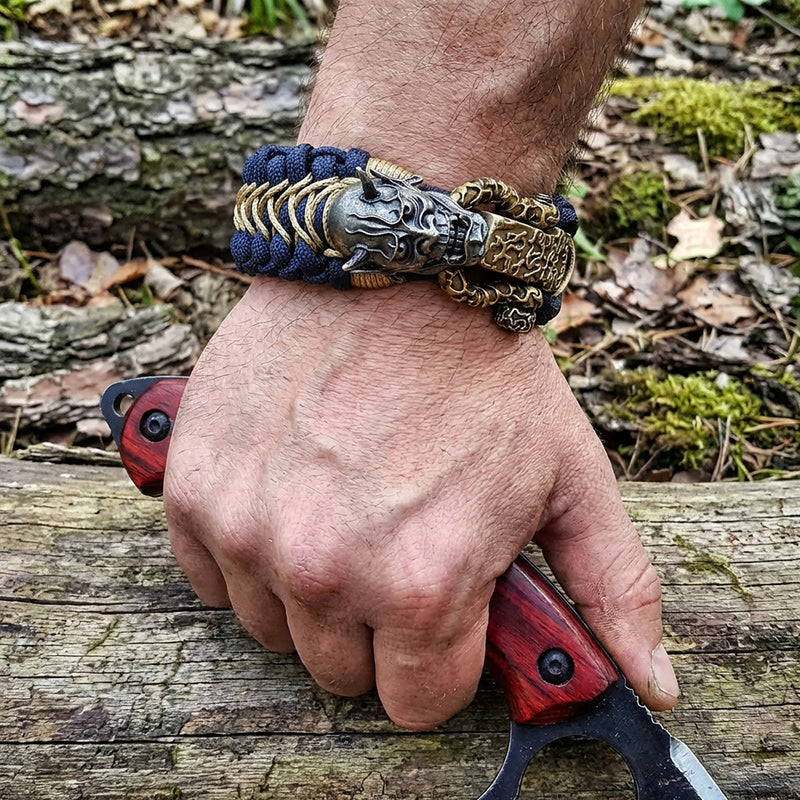
Not all paracord bracelets are created equal. Whether you need one for survival, outdoor adventures, or everyday carry, choosing the right bracelet can mean the difference between gear that performs and gear that fails when it matters most.
TL;DR — Quick Answer
The right paracord bracelet is determined by your primary use: 550 paracord Type III for survival/emergency (550lb tensile strength), 275 micro paracord for lightweight hiking, 425 utility cord for tactical everyday carry. Match the bracelet weight to your activity, choose a reliable clasp (侧扣 over prong), and always verify genuine mil-spec paracord.
Table of Contents
- Understanding Paracord Types
- How to Choose Based on Your Activity
- Key Features to Look For
- Clasp Types: Buckle vs Prong
- Bracelet Sizing Guide
- Frequently Asked Questions
Understanding Paracord Types
Type III 550 Paracord — The Gold Standard
Type III paracord, commonly called 550 cord, is the most popular survival bracelet material. The "550" refers to its 550-pound minimum breaking strength. Each strand contains 7-9 inner yarns, giving it exceptional durability and versatility. A single unraveled 550 bracelet provides 8-10 feet of rope for shelter building, gear repair, or emergency fishing line.
Type II 425 Utility Cord
Slightly thinner than 550, 425 paracord is ideal for everyday tactical carry. It offers 425lb breaking strength — more than enough for daily tasks while keeping the bracelet lighter and more discreet.
Type I Micro Cord (275)
Weighing just a fraction of 550 cord, 275 micro paracord bracelets are comfortable for all-day wear. They provide 275lb breaking strength — suitable for light outdoor tasks but not recommended as primary survival gear.
How to Choose Based on Your Activity
Hiking and Backpacking
For multi-day hikes, choose a 550 Type III survival bracelet with fire-starting ferro rod insert. Look for breathable knotted designs that dry quickly if wet. Weight should not exceed 2oz per bracelet.
Urban Everyday Carry (EDC)
For daily urban wear, a 425 utility cord bracelet offers tactical style without the bulk. Choose subdued colors (black, OD green, coyote brown) that match most wardrobes. Comfort-focused designs with smooth weave are ideal for all-day wear.
Tactical and Military Use
Tactical applications demand mil-spec 550 paracord from verified suppliers. Look for NIR (Near-Infrared) compliant materials if operational security is a concern. Heavy-duty side-release buckles rated for 200lb+ are essential.
Gift and Fashion
For fashion purposes, choose based on aesthetic: braided patterns show craftsmanship, stamped brass求生 buckles add character, and custom woven designs offer personal expression. Function takes a back seat but quality construction still matters.
Key Features to Look For
Genuine Mil-Spec Paracord
Counterfeit paracord is rampant. Real mil-spec paracord has:
- 7 inner strands minimum
- UV-resistant nylon jacket
- Consistent color throughout
- No plastic smell or shiny appearance
Quality Clasp Mechanism
The clasp is the weakest point in any bracelet. Side-release buckles (also called求生 buckles) are preferred over prong buckles because:
- Easier one-handed operation
- More secure (won't accidentally open)
- Higher break strength
- Replacement parts widely available
Weave Quality
Quality bracelets feature tight, consistent weaves: cobra weave, fishtail, or trilobite. Loose weaves unravel under stress. Inspect the underside for frayed ends or hot-cut (melted) tips that indicate rushed production.
Clasp Types: Buckle vs Prong
Side-Release Buckle (侧扣): Military-style clip. One-handed operation. Break strength 200-400lb depending on material. Ideal for survival/tactical use. Widest availability.
Prong Buckle: Classic side-release. Requires two hands. Lower break strength but familiar design. Common on fashion-focused bracelets. Less secure under load.
Paracord Loop: No hardware — just a knotted loop. Lightest option. Requires passing the cut end through the loop to tighten. Least secure but simplest design.
Bracelet Sizing Guide
Measure your wrist with a flexible tape measure (or a piece of string):
| Wrist Circumference | Recommended Bracelet Size | Paracord Length |
|---|---|---|
| 6-6.5 inches | Small (S) | 9-10 feet |
| 6.5-7 inches | Medium (M) | 10-11 feet |
| 7-7.5 inches | Large (L) | 11-12 feet |
| 7.5-8 inches | Extra Large (XL) | 12-13 feet |
Tip: When in doubt, size up. A slightly loose bracelet is adjustable; one that's too tight cannot be fixed.
Frequently Asked Questions
Q: What paracord strength do I need for survival situations?
A: For survival use, always choose Type III 550 paracord. Its 550lb tensile strength handles shelter building, gear repair, and emergency load-bearing. Type I micro paracord (275lb) is insufficient for critical survival tasks.
Q: How much paracord is in one bracelet?
A: A typical survival bracelet contains 8-12 feet of paracord when woven, unraveling to provide 8-12 feet of rope plus 7-9 inner strands for finer tasks like suturing or fishing line.
Q: Can I shower with my paracord bracelet?
A: Yes — quality nylon paracord dries quickly and won't rot. However, repeated exposure to chlorinated pools or saltwater accelerates wear. Rinse with fresh water after ocean swimming.
Q: What clasp type is most secure?
A: Side-release buckles (侧扣) are the most secure. They require deliberate two-step operation to open, preventing accidental release under load. Prong buckles can slip open more easily.
Q: How do I maintain my paracord bracelet?
A: Paracord requires minimal maintenance. Rinse with clean water if exposed to saltwater or mud. Air dry completely. Inspect the weave periodically for signs of fraying. Replace if the outer jacket shows significant abrasion.
Find the right paracord bracelet for your needs. Boysouls crafts survival, tactical, and everyday carry bracelets using verified mil-spec paracord and durable hardware. Every bracelet is stress-tested before shipping.
Share:
"Essential Outdoor Gear Checklist: What Every Adventurer Needs in 2026"
Paracord Bracelets for Outdoor-Inspired Everyday Carry