

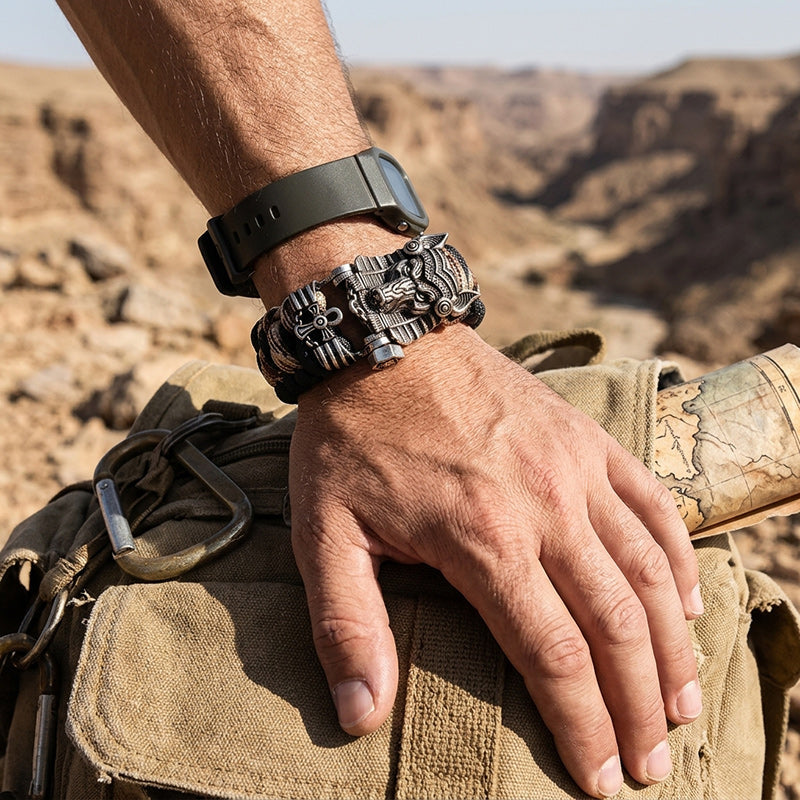
Key Takeaway: A genuine paracord bracelet uses authentic 550 cord—a nylon kernmantle rope with 7 to 9 inner strands that meets U.S. military specifications and can hold 550 pounds. Counterfeits are often polyester, have fewer strands, or lack that load rating. Look for mil-spec labeling, a textured nylon sheath, and consistent weaving to separate the real from the fake.
The 10-Second Authenticity Test
Before buying or when you're holding a paracord bracelet, ask three questions: Does it have 7–9 inner yarns? Does the outer sheath melt into a hard bead, not ash (burn test)? Is it marketed as “Type III 550 cord”? If the answer to any of these is no, you’re likely holding a fake. Genuine American-made paracord, from brands like Atwood Rope or Titan, also carries a mil-spec print on the core. No one wants to trust their emergency gear to a bracelet that snaps under 200 pounds.
What Is a Paracord Bracelet, Really?
A paracord bracelet isn't just a rugged accessory—it’s a compact survival tool. Woven from the same parachute cord originally developed for the U.S. military, these bracelets hold anywhere from 8 to 15 feet of usable cordage. The cord’s outer nylon sheath protects 7 to 9 twisted inner strands, each of which can be extracted for fishing line, sewing thread, or snares in an emergency. In the United States, the standard is MIL-C-5040H Type III, commonly called 550 cord. The bracelet form keeps it on your wrist until you need it—no packing, no forgetting.
For curious beginners, think of it like carrying a swiss army knife on your wrist. For premium lifestyle buyers, it’s a statement: I value preparedness and craftsmanship.
Why Authenticity Matters (More Than You Think)
When a paracord bracelet is fake, it’s more than a wasted $15. It’s a safety gamble. Real 550 cord can suspend your body weight. Fake cord often snaps during critical moments—shelter building, tourniquet use, even just securing gear. Moreover, authentic nylon resists mildew, UV damage, and abrasion far better than polyester knockoffs. For Americans who hike, camp, or prep for natural disasters, that reliability isn’t a luxury; it’s the whole point.
Beyond function, fake bracelets often feel plasticky, wear out quickly, and look cheap. A premium, handcrafted American paracord bracelet uses mil-spec materials and secure weaves, aging beautifully like a good leather boot.
8 Signs of a Fake Paracord Bracelet
Spotting a counterfeit doesn’t require a lab. Use these visual and tactile checks before you click “buy” or at the store.
- Inner strand count is wrong. Burn the end slightly to expose the core. Genuine 550 cord has 7, 8, or 9 twisted strands. Fakes often have 4–6 or just loose fillers.
- Slippery, shiny finish. Real nylon has a matte, slightly rough texture. Polyester fakes are glossy and slick, more like a plastic shopping bag than a rope.
- No mil-spec marking. Authentic paracord, especially U.S.-made, prints “MIL-C-5040H” or “Type III” on an inner strand. If it’s blank, question it.
- Burn test failure. Touch a flame to a cut end. Nylon melts into a hard, dark bead and smells like celery or plastic. Polyester melts and drips, producing black smoke and smelling sweet/chemical.
- Thin or inconsistent weave. Real paracord is 4mm diameter and feels uniformly round. Fakes may bulge or feel hollow.
- Suspiciously low price. A genuine 550 cord bracelet with solid hardware rarely costs under $20. Under $10 is a red flag.
- Weak cobra weave. Fake bracelets often use loose, uneven knots that unravel under tension. Authentic bracelets are tightly braided with clean, symmetrical links.
- Hardware shortcuts. Plastic buckles instead of metal or reinforced composite, and flimsy side releases are telltale signs of a mass-produced fake.
Real vs Fake Paracord Bracelet: Comparison Table
| Feature | Authentic 550 Paracord Bracelet | Fake / Low-Quality Bracelet |
|---|---|---|
| Material | 100% nylon sheath, 7–9 nylon inner strands | Polyester sheath, 4–6 strands, or cotton filler |
| Strength | 550 lbs (249 kg) minimum tensile strength | 50–200 lbs, unpredictable failure |
| Burn Behavior | Melts into hard bead, slight celery odor | Drips, black smoke, acrid sweet smell |
| Texture | Matte, slightly rough, “grabby” | Glossy, slippery, plasticky |
| Inner Markings | Often labeled “MIL-C-5040H Type III” | Unmarked or generic “made in China” |
| Weave Quality | Tight, even, no loose loops | Loose, uneven, gaps |
| Hardware | Metal or durable reinforced polymer | Cheap plastic, sharp burrs |
Who Should Buy a Real Paracord Bracelet?
This isn’t just a prepper’s toy. Anyone in the United States who spends time outdoors—hikers, hunters, campers—or who values minimalist everyday carry gear benefits from 550 cord around their wrist. Even urban dwellers use them as a subtle nod to readiness. Premium buyers lean toward handcrafted American bracelets with unique weaving patterns and solid brass or stainless steel hardware; they’re buying jewelry that saves a day. Beginners need a reliable entry point that won’t fail the first time they unwrap it. In short, if you want a bracelet that actually works when life gets rugged, authenticity is non-negotiable.
How to Choose an Authentic Paracord Bracelet: Buying Guide
When shopping online, especially on marketplaces with mixed sellers, apply these filters.
- Check the product description. Look for “Type III,” “550 cord,” “mil-spec,” or “7-strand core.” Vague phrases like “survival cord” are a cue to dig deeper.
- Ask the seller for a core photo. Reputable makers show an exposed end to prove the inner strand count. In the U.S., brands like Boysouls, Titan, or Atwood Rope openly display this.
- Verify country of origin. American-made doesn’t automatically equal authentic, but paracord manufactured in the U.S. to government standards is a strong quality signal. Be wary of “US assembled” language that hides imported cord.
- Review the hardware. Quality side-release buckles, compass attachments, or fire-starting ferrules should feel solid and operate smoothly. Gritty threads and lightweight feel indicate fakes.
- Read recent reviews. Look for photos of the actual bracelet and mentions of the burn test or strand count. One-star rants about “broke the first time I used it” confirm fake stock.
Real-Life Scenarios: When the Fake Fails
Imagine you’re on a weekend hike in a national park, twist your ankle, and need to improvise a splint. You unravel your bracelet, use the full 12 feet of cord, and as you tighten the knot—snap. The fake paracord simply pulls apart because it lacked the nylon’s tensile strength. In American wilderness areas, where help might be hours away, a couple dollars saved upfront becomes a painful lesson. The same applies during a power outage or vehicle breakdown; real 550 cord can secure a tarp, tie down a load, or even replace a broken shoelace. Fake cord strips you of those options.
Care Tips to Preserve Your Bracelet’s Integrity
Once you’ve secured an authentic piece, treat it right. Rinse off salt water, chlorine, or mud promptly—nylon doesn’t rot, but trapped grit can abrade fibers. Let it air dry; never machine dry or iron. If you repeatedly unwind and rebraid it, the cord may lose its memory, so practice with a spare length first. Store away from prolonged direct sunlight to avoid UV degradation over years. With minimal care, a genuine paracord bracelet will stay ready for any American adventure.
Frequently Asked Questions (FAQ)
How can I test if my paracord bracelet is real without destructive methods?
First, feel the sheath: real nylon is matte and slightly rough. Look at the weave’s tightness—if it’s loose or uneven, that’s a warning. Many authentic bracelets have a small exposed core at the clasp area; you can count the inner strands there. If not, ask the seller for a photo of the core before buying. A non-destructive burn test is impossible, but a gentle pull test with body weight can reveal weakness, though not recommended without backup safety.
What is the difference between Type III and Type IV paracord?
Type III 550 cord has a minimum tensile strength of 550 pounds and typically contains 7–9 inner strands. Type IV (also called 750 cord) has 11 inner strands and a 750-pound rating, so it’s slightly thicker. Most “survival bracelets” use Type III. If a seller claims “550” but the cord is visibly thinner than 4mm, it’s likely a fake.
Are all American-made paracord bracelets genuine?
Not automatically. Some small shops use imported cord that lacks mil-spec certification. However, paracord manufactured in the USA by reputable companies (Atwood Rope Co., Titan Survival, E.L. Wood) is generally authentic. Always verify the cord’s spec regardless of the bracelet brand. Look for “Proudly Made in USA with US-made paracord” labels.
Can a fake paracord bracelet still be useful in an emergency?
Limited. You might use it for bundling sticks or light tie-downs, but you cannot trust it for load-bearing tasks like hoisting gear, making a tourniquet, or supporting weight. Because it fails unpredictably, relying on fake paracord is like carrying a dull knife: it gives false confidence. In a true emergency, you want the real thing.
Why does 550 paracord have 7 inner strands? I’ve seen bracelets with only 5 strands.
MIL-C-5040H Type III requires 7 to 9 core yarns, each made of two twisted nylon plies. This configuration gives the cord its 550-pound strength and the ability to unpick individual threads for fishing or sewing. Bracelets with only 5 strands are almost certainly fake, as they lack the redundant strength and utility. Always count before you buy.
Wrap It Up: Invest in the Real Deal
An authentic paracord bracelet merges form and function—a piece of American preparedness you wear every day. By checking the strand count, burn behavior, and mil-spec markings, you’ll never fall for a fake again. Whether you’re a weekend warrior in the Rockies or a city slicker who values self-reliance, choose genuine 550 cord and quality hardware. It’s a small investment in the kind of quiet confidence that only real gear delivers.
Ready to own a bracelet you can bet your safety on? Explore our collection of American-made, mil-spec paracord bracelets—woven tight and built to last.
Explore Our Collection
Ready to experience the world of paracord bracelet? Browse our curated collection:
Disclaimer: This article is for informational purposes. Products and pricing subject to change.
Share:
How to Spot a Fake Paracord Bracelet: Authenticity Guide (2026)
Paracord Bracelet: The Unexpected Luxury Wellness Ritual for Your Home