

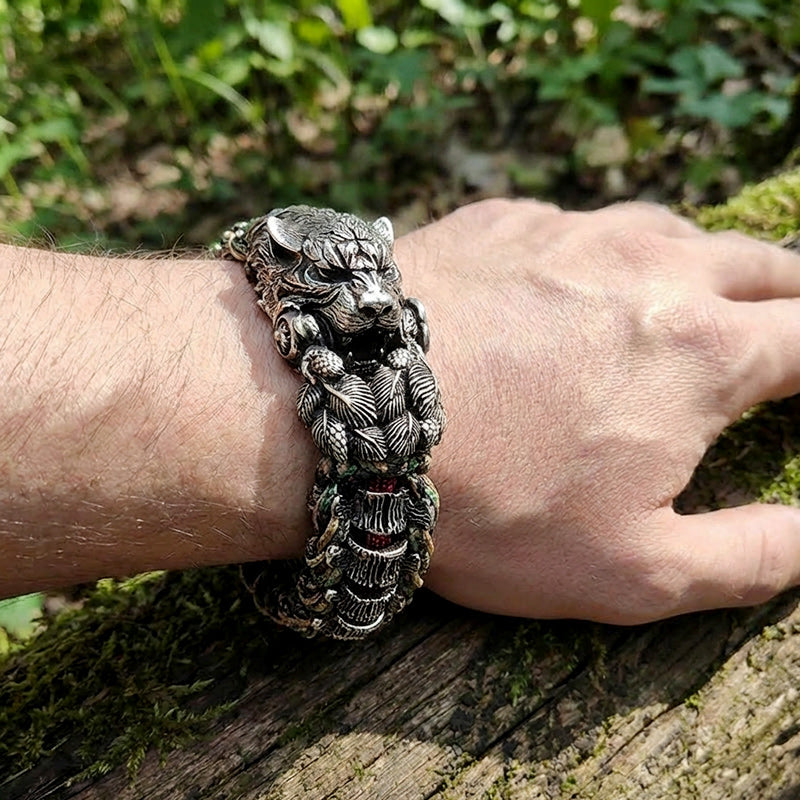
You cannot identify a “real” paracord bracelet from its weave, color, or price alone. Check what the exact seller listing documents, separate visible design from technical claims, and ask for missing details before ordering. A photo can help you choose a bracelet; it cannot certify its cord.
Updated October 7, 2026 · Boysouls Editorial Team.
What does “real paracord” mean when buying a bracelet?
First decide what you want to verify: the advertised bracelet design, the cord specification, or a claim about the finished accessory. These are different questions. A matching product photo supports a design comparison. A written material description tells you what the seller lists. Neither, by itself, establishes independent testing or a load rating.
This guide helps you evaluate an everyday accessory listing. Boysouls paracord accessories are designed for everyday carry, outdoor style, light utility, and gift use. They are not certified climbing, towing, rescue, medical, or life-safety equipment.
Which details can you check without damaging the bracelet?
Use the exact product page and selected option as your starting point. Keep notes on what is stated, what is visible, and what is still unknown. Missing evidence is a reason to ask a question; it is not proof that a product is counterfeit.
| Question | Useful evidence | What remains unproved |
|---|---|---|
| Is this the design I want? | Photos of the exact motif, braid colors, closure and wrist profile; a matching product name. | Fiber composition, origin or performance. |
| What is it made from? | A material statement that identifies the relevant component: cord, hardware or both. | A generic material line does not automatically describe every component. |
| Which size am I choosing? | The selected variant label and a definition of inner circumference versus full length. | A full-length number alone does not establish wrist fit. |
| Does a technical claim apply? | Documentation identifying the exact cord or finished item and the scope of the claimed specification. | A label, price, braid pattern or photo is not a test report. |
| What happens if it is unsuitable? | Current care instructions, delivery information, return terms and a working contact route. | Do not assume a return exception or delivery date that the seller has not confirmed. |
The FTC's online shopping guide recommends reading the full description and comparing details such as model, size, color and shipping costs. Apply that approach to the specific bracelet and option you are considering.
What do two current Boysouls listings actually tell you?
Our October 7 page review uses the Boysouls Tiger Paracord Bracelet and Boysouls Warrior Wolf Paracord Bracelet. This is a comparison of published product records and photographs, not a hands-on test or independent material verification.
Read the hero photo: The Tiger bracelet is shown worn outdoors, with a raised tiger motif and a dark patterned braid. That helps you judge visual presence on a wrist. It does not identify the cord fiber, hidden strands or strength.

| Record checked | Tiger | Warrior Wolf | How to use it |
|---|---|---|---|
| Visible design | Tiger motif; dark patterned braid in the wearing photo. | Wolf motif; black braid with red accents in the wearing photo. | Choose a visual design; do not infer cord specifications from color. |
| Material wording | The description lists “Cupronickel.” | The description lists “Cupronickel.” | This wording does not document the cord fiber. Ask which component a material claim covers if that matters to your purchase. |
| One listed size example | 18 cm inner circumference / 22 cm full length. | 18 cm inner circumference / 22 cm full length. | These are two different measurements, not interchangeable size labels. Use the wrist guide and confirm the selected option. |
| Intended use | Everyday accessory with the stated use limits. | Everyday accessory with the stated use limits. | Do not turn a style comparison into a safety-equipment recommendation. |
These details were checked on October 7, 2026. Reopen the listing before checkout: variant availability, price and policy terms may change. The examples above apply to these two listings only.
What should you ask when a material or size detail is missing?
Send the product link and exact option with a specific question. This is more useful than asking whether everything in a catalog is “genuine.” You can copy and adapt this message:
I'm considering [product link] in [selected option]. Which part does the listed material describe? Is the cord material documented for this design? Does this size refer to inner circumference or full length, and how should I compare it with my measured wrist? Please point me to the relevant product information and current return terms.
For Boysouls, use the product-question contact page. If an important detail remains unconfirmed, leave it marked unknown rather than filling the gap with assumptions. For a technical safety requirement, this accessory category is not an appropriate substitute.
Should you use a burn test or pull test to check authenticity?
No. Do not burn, cut or load a finished bracelet as a home “authenticity test.” This guide provides no destructive testing procedure. Such a test would not establish certification of the finished accessory, and the Boysouls use limits still apply.
For an ordinary purchase, compare the received item with your saved listing and selected option. If its motif, color, closure or size label differs, photograph the discrepancy and ask the seller to resolve it through the stated support and return process. A visible mismatch is a support issue to investigate, not a basis for an unsupported technical conclusion.
When do you have enough information to choose?
Proceed when the design suits you, the size label is understood, the material information covers what matters to you, and the current delivery and return terms are acceptable. Pause when an unanswered question could change your decision.
- Measure your wrist before selecting a size.
- Read the Boysouls accessory care and use limits.
- Check shipping information and current return terms.
- Compare Boysouls paracord bracelets using the checklist, or continue with the bracelet buying guide.
Editorial scope: Boysouls Editorial Team reviewed current Boysouls product pages and original brand photographs for this guide. No cord composition, load test, manufacturing origin or certification was independently verified.
What should readers know before using Boysouls paracord accessories?
Direct answer: Boysouls paracord bracelets and keychains are designed for everyday carry, outdoor style, light utility, and gift use. Boysouls paracord accessories are not certified climbing, towing, rescue, medical, or life-safety equipment.
Use each product page as the source of truth for listed material details, size options, clasp or ring style, current price, shipping timing, returns, and care guidance.
Share:
Paracord Bracelet Price Guide for Men's Gifts
Paracord Bracelet: A Daily Luxury Ritual—How a Simple Cord Becomes Your Home Wellness Anchor