

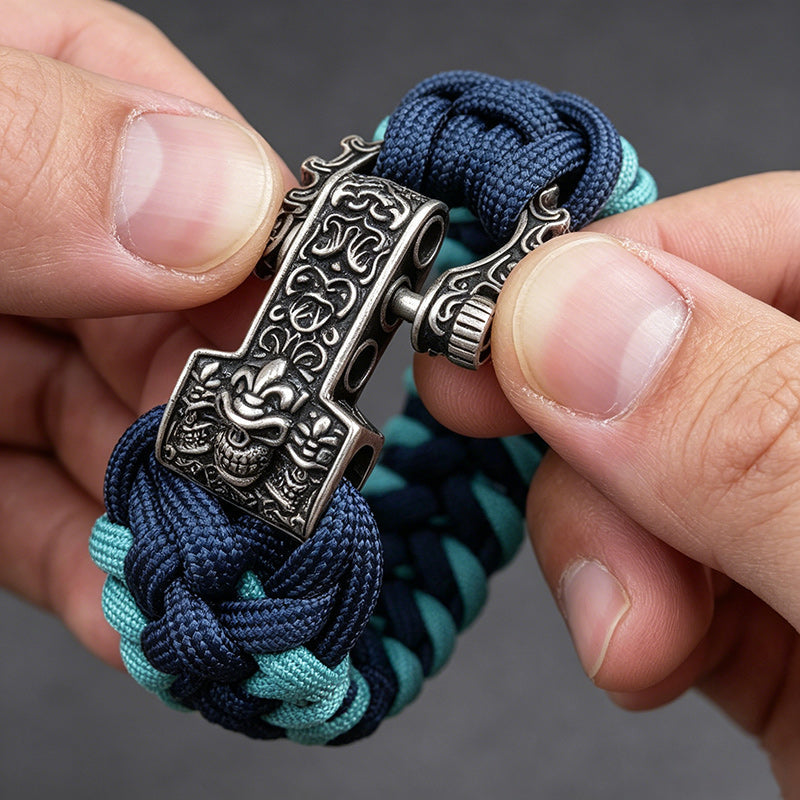
What Makes a Paracord Bracelet Authentic?
A real paracord bracelet is built from certified 550 (Type III) paracord: a nylon outer sheath housing exactly seven inner yarns, each made of two to three twisted nylon filaments. Fakes swap in polyester, cotton, or far fewer strands. If your bracelet can’t hold 550 pounds of breaking strength, it’s a costume piece—not a survival tool.
Key Takeaways
- Authentic 550 cord always has 7 inner strands.
- Fakes feel lighter, softer, and unravel easily.
- MIL-C-5040H mark and a burn test reveal the truth instantly.
- Genuine bracelets offer real emergency utility; counterfeits risk failure when it matters.
What Is a Genuine Paracord Bracelet?
In the US, the term “paracord bracelet” traces back to military parachute suspension lines. Authentic bracelets use Type III nylon with a minimum tensile strength of 550 lbs. The construction has a woven outer sheath and seven two-ply inner strands. A genuine bracelet feels slightly stiff, holds its shape, and smells like nylon—not like a cotton T-shirt.
Think of it like the difference between a fine Swiss Army knife and a plastic toy replica. One is engineered for reliability; the other only copies the look.
Why Authenticity Matters
A fake bracelet lulls you into a false sense of security. If you ever need to unbraid the cord for a tourniquet, fishing line, or bootlace, a substandard knockoff can snap under moderate tension. Authentic 550 cord has saved lives in backcountry rescues across the United States from the Rockies to the Appalachians. It’s not just jewelry—it’s a wearable emergency kit.
- Safety: Real cord holds human weight for emergency shelter ties.
- Resale value: A well-made genuine bracelet lasts years.
- American craftsmanship: Many top makers source US‑made cord and hand-braid in small batches.
Key Benefits of Real 550 Paracord
- 550-lb tensile strength: Survives gear repair, tow lines, and bear bags.
- 7 inner strands: Each can be separated into finer threads for sewing or fishing.
- UV and rot resistance: Nylon resists mildew, unlike cotton fakes.
- Fast drying: Won’t stay waterlogged in wet climates.
- Colorfastness: Genuine military‑spec dye doesn’t bleed onto your skin the way cheap dyes do.
How to Spot a Fake Paracord Bracelet: 7 Telltale Signs
1. Count the Inner Strands
Cut a small piece or carefully unthread the end. Authentic 550 cord reveals 7 distinct twin‑ply strands. Fakes might show 4, 5, or a single fluffy core.
2. The Burn Test
Hold a lighter to the end for two seconds. Nylon melts into a hard bead with a plastic odor, then self‑extinguishes. Cotton fakes burn with a soft ash and smell like paper; polyester drips and smells chemical.
3. Sheath Memory
Push the outer sheath back a quarter inch—it should spring tightly over the core when released. Cheap materials stay loose or fray immediately.
4. Weight and Thickness
A genuine 5‑foot bracelet feels noticeably heavier. Fakes often use hollow‑core paracord or a thin sheath to save money, making the bracelet limp and light.
5. Weave Tightness
Hand‑braided authentic bracelets show even, firm stitching. Mass‑produced fakes have gaps, loose loops, or inconsistent knotting that lets the inner cord peek through.
6. Source Transparency
Reputable American brands state “Type III 550 nylon” or “MIL‑C‑5040H compliant” directly on the product page. Vague descriptions like “survival cord” or “parachute cord” without specs are red flags.
7. Price That’s Too Good to Be True
If you see a “550 paracord bracelet” for under $8, the cord itself likely costs more than that to produce. Authentic US‑made bracelets typically range from $15 to $40 depending on weave complexity and hardware.
Real vs Fake Paracord Bracelet: Quick Comparison
| Feature | Genuine 550 Paracord | Fake / Substandard |
|---|---|---|
| Inner strands | Exactly 7 nylon strands | Fewer strands, cotton, or single core |
| Burn reaction | Hard bead, plastic odor | Soft ash, paper/chemical smell |
| Weight (5–6ft length) | Noticeably dense; holds shape | Light, floppy |
| Sheath rebound | Snaps back, stiff | Loose, frays easily |
| Price range (US market) | $15–$40+ | Often under $10 |
| Survival reliability | Trusted by military and first responders | No guaranteed breaking strength |
Who Should Buy an Authentic Paracord Bracelet?
- Outdoor enthusiasts: Hikers, campers, and hunters who want an emergency line in a pinch.
- Everyday carry fans: Guys who value functional accessories that can double as a bottle opener, compass mount, or firestarter loop.
- Preppers: Anyone building a go‑bag needs gear that works, not props.
- Gift shoppers: A rugged, American‑made bracelet shows you care about quality—perfect for birthdays, graduations, or groomsmen.
- Style‑conscious men: An authentic paracord bracelet adds a rugged, masculine edge without looking costume‑like, especially in earth tones or classic black.
Real-Life Scenarios Where the Difference Matters
Backpacking in the Sierra Nevada: A busted tent pole needs a quick splint. Genuine cord cinches tight and holds; fake cord snaps on the first knot, leaving you exposed.
Car kit emergency: You unbraid the bracelet to tie down a trunk load. Real 550 paracord resists abrasion and won’t stretch permanently; polyester cord frays against sharp edges and unravels on the highway.
Teaching kids knot skills: A true nylon bracelet retains its shape through dozens of practice ties, while cotton knockoffs weaken and shed fibers.
Care Tips for Your Genuine Paracord Bracelet
- Wash by hand: Soak in lukewarm water with mild soap. Don’t machine wash—the agitation can loosen the weave.
- Air dry only: High heat can shrink or warp nylon. Hang it in a shaded spot.
- Store flat: Avoid cramming it into a tight pocket for weeks; the cord can develop a memory crease.
- Inspect annually: Look for frayed inner strands or a sheath that’s lost its snap. Replace if the bracelet no longer meets your reliability standards.
Frequently Asked Questions
Already embedded in the page’s structured data, but here are quick answers:
- What is the easiest way to tell if a paracord bracelet is real?
- Unthread the inner strands—seven means real, fewer means fake.
- Can a fake bracelet still work in an emergency?
- It might hold light loads, but under rescue-level tension, fakes break.
- Why does the burn test matter?
- Nylon melts and self‑extinguishes; alternative materials burn or drip.
- Are all US-made bracelets automatically authentic?
- No. Always verify MIL‑C‑5040H compliance or the 7‑strand test.
- Is a higher price a guarantee?
- Not always, but suspiciously low prices are a massive red flag.
Conclusion
Spotting a fake paracord bracelet isn’t rocket science—it’s a two‑minute check that can save you money and protect you when it counts. Stick with American‑crafted, transparently sourced 550 paracord that passes the 7‑strand and burn tests. You deserve gear you can rely on, whether you’re conquering a trail or simply upgrading your daily carry.
Ready to own a bracelet that’s the real deal? Explore our collection of hand‑braided 550 paracord bracelets—made in the United States, backed by a craftsmanship guarantee, and built to perform when needed.
Share:
Real vs Fake Paracord Bracelet: How to Spot a Counterfeit in Seconds (2026)
How to Spot a Fake Paracord Bracelet: Authenticity Guide (2026)