

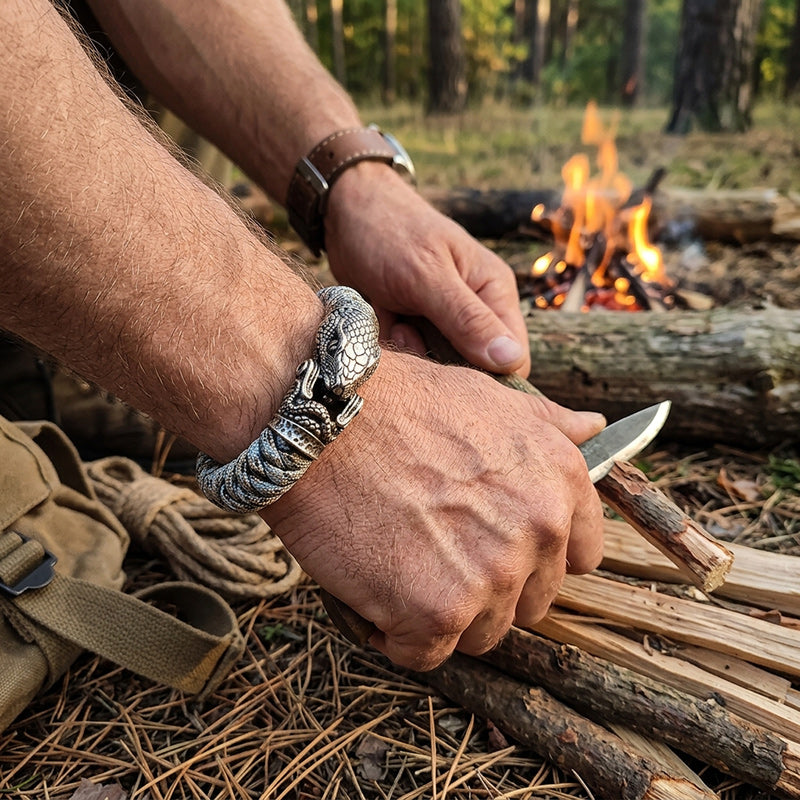
The short answer: A high-end paracord survival bracelet costs more because you're not just buying a piece of cord—you're investing in hours of skilled handcraft, military-spec materials that can hold 550 pounds, custom metal hardware, and a wearable emergency tool. Like a fine mechanical watch or a hand-stitched leather wallet, the price reflects expertise, reliability, and the peace of mind that comes with genuine quality.
What Is a Premium Paracord Survival Bracelet?
At its core, a premium paracord bracelet combines rugged style with lifesaving utility. Unlike mass-produced fashion accessories, a properly crafted survivor bracelet uses genuine 550 paracord (parachute cord) and features a quick-release buckle, compass, whistle, or fire starter. The bracelet unravels into 8–12 feet of 7-strand cord that can support heavy loads, build shelter, or create a tourniquet. Premium versions elevate this concept: handcrafted paracord bracelets fit like a custom piece of outdoor jewelry while standing ready for the unexpected.
Why the Price Tag Surprises First-Time Buyers (And Why It Shouldn’t)
Americans used to picking up a $5 woven band at a big-box store often experience sticker shock when they see a $45–$120 hand-tied survival bracelet. The reaction is normal, but it misses the point. Imagine walking into a Texas leathersmith’s workshop and questioning why a hand-tooled belt costs three times more than a synthetic department-store belt. You’re paying for materials that age gracefully, construction that won’t fail at the buckle, and the skill of a craftsperson who has spent years perfecting every stitch.
Similarly, a premium paracord bracelet is not a disposable trinket. It’s a fusion of textile engineering, outdoor preparedness, and wearable art. That distinction changes everything.
The Hidden Labor: Hand-Weaving Takes Time—and Skill
When you look at a tightly woven King Cobra or fishtail paracord bracelet, you’re seeing 30–90 minutes of uninterrupted manual labor. An artisan weaves each bracelet by hand, maintaining consistent tension so the pattern doesn’t deform under stress. High-density weaves create that satisfying heft and slim profile that mass-produced bracelets lack. Compare this to a machine that spits out loose, uneven coils in seconds.
Artisans often learn through years of practice. A flawed knot halfway through means cutting everything off and starting over. This meticulousness parallels a custom knife maker grinding and hand-fitting a blade—the time investment directly correlates to the final price, and the result is a functional tool that looks immaculate.
Why Hand-Tied Matters for Survival
A bracelet that comes apart smoothly in an emergency requires expert tension control. Too tight, and you can’t unravel it quickly; too loose, and it snags on brush or falls apart during a hike. Premium makers test each bracelet for a clean, predictable pull. That’s not something you get from a factory assembly line churning out thousands a day.
Military-Grade Materials: Not All “Paracord” Is Equal
The term “paracord” gets thrown around loosely. Genuine 550 paracord meets strict Mil-Spec-C-5040 standards: a minimum breaking strength of 550 pounds, seven inner strands (each with 2–3 yarns), and a woven nylon outer sheath that resists rot, mildew, and UV damage. Cheap knockoffs often use polyester cores with a fraction of the strength—they’re costume jewelry, not survival gear.
Premium bracelets from reputable craftsmen source cords from certified U.S. mills. They might also incorporate reflective tracer strands for visibility or fire-resistant aramid fibers. This material cost alone can be 3–5 times higher than generic “survival cord.” Imagine the difference between genuine Horween Chromexcel leather and bonded leather scraps: one lasts a lifetime, the other cracks in a season.
Hardware That Won’t Let You Down
Look at the clasp on a premium bracelet: it’s likely marine-grade 316L stainless steel, solid brass, or titanium. Some incorporate a loud emergency whistle, a liquid-filled compass, or a ferrocerium rod for fire-starting. That’s functional jewelry—a piece of engineering, not a molded plastic side-release buckle that snaps under a 20-pound pull.
Think of it like the clasp on a Swiss diving watch: you trust it to stay closed when lives depend on it. High-end hardware also resists corrosion from sweat, saltwater, and snow, maintaining its appearance and reliability for years. That’s a one-time investment versus replacing a rusted $10 bracelet every summer.
Heirloom Durability vs. Disposable Fast Fashion
Premium paracord bracelets are built to become part of your everyday kit. Their color-stay nylon won’t fade after a few creek crossings. The weave holds its shape, and the hardware develops a subtle patina rather than flaking. Users often pass them down as sentimental gear—the same way a father’s Zippo lighter or a grandfather’s pocket knife carries stories.
When viewed over a decade, the price per wear or per adventure becomes negligible. A $60 bracelet worn 300 days a year for five years costs about 4 cents per day. That’s cheaper than a daily coffee—and it might save your life.
Survival Tool First, Accessory Second
Here’s the value multiplier: a premium bracelet doesn’t just look rugged; it is a compact emergency kit. Whether you’re a backcountry hunter, an overlander, or a dad coaching his kid’s camping troop, you carry a length of cordage, a fire starter, and a signaling device—all without adding bulk to your gear. If you ever need to rappel gear, stabilize a splint, or replace a broken bootlace, the bracelet transforms in seconds. There’s no price tag on readiness.
How to Assess Real Value Before You Buy
Not every expensive bracelet is automatically worth it. Use this checklist to separate smart spending from hype:
- Check the weave density: Run your thumb across the knots. They should feel tight like a braided rope, with no gaps.
- Verify cord origin: Ask if the maker uses U.S.-made 550 paracord. Beware of vague “mil-spec style” claims.
- Inspect hardware weight: Stainless steel feels cool and heavy; cheap alloys feel brittle and light.
- Test the unravel function: A quality bracelet allows a user to pull the end and release the entire length in one smooth motion.
- Look for lifetime guarantees: Artisans who stand behind their knots often offer repairs or replacements.
Quick Comparison: Mass-Produced vs. Handcrafted Premium
| Feature | Mass-Produced Paracord Bracelet | Premium Handcrafted Bracelet |
|---|---|---|
| Paracord Type | Often polyester blend or non-certified | Mil-spec 550 nylon, USA-sourced |
| Weave Quality | Loose, machine-knotted, pattern gaps | Tight, hand-tied, complex weaves (King Cobra, Viper, etc.) |
| Hardware | Plastic buckle or thin alloy | Stainless steel, brass, or titanium with integrated tools |
| Strength Reliability | Bull rating often exaggerated | Consistent break limits over 500 lbs |
| Durability | Fades, frays within months | Colorfast, rot-resistant, ages without failure |
| Emergency Function | Hard to unravel, cord may tangle or snap | Smooth, predictable unravel under stress |
| Price Range | $5–$15 | $35–$120+ |
Real-Life Scenarios Where Premium Value Shines
Weekend Backpacking in Colorado: You snag your boot lace on scree, and it snaps. Thirty seconds of unraveling your bracelet gives you a replacement lace as strong as steel, and you finish the loop without a blister-inducing bailout.
Unexpected Roadside Emergency: You need to secure a torn tarp over your truck bed during a sudden storm. The bracelet becomes 10 feet of high-tensile rope that holds tight against highway wind.
Gift for a Special Forces Nephew: A premium bracelet etched with a meaningful compass or wolf emblem isn’t just gear—it’s a token of respect that aligns with his values of preparedness and strength. That emotional resonance adds immeasurable value.
Care Tips to Protect Your Investment
To keep a high-value bracelet performing and looking sharp:
- Rinse after saltwater or heavy sweat: Use cool water and mild soap, then air-dry completely.
- Avoid prolonged UV baking: Nylon eventually weakens under direct desert sun. Store in a cool place when not worn.
- Re-tighten loose ends: If a starter tip begins to slip, tuck it back with a small tool rather than pulling indiscriminately.
- Periodically test the pull: Every few months, ensure the unravel motion stays smooth. This confirms internal strand integrity.
These minimal steps ensure your bracelet stays mission-ready and retains its appearance for years.
Who Should Buy a Premium Paracord Survival Bracelet?
- Outdoor Enthusiasts: Hikers, climbers, hunters, and anglers who demand gear that works when phones are dead.
- Everyday Carry (EDC) Crowd: People who appreciate functional jewelry and preparedness as a mindset.
- Gifters: Anyone looking for a meaningful, masculine gift that blends tradition, utility, and artistry—perfect for dads, groomsmen, graduates, or servicemembers.
- Minimalist Preppers: Those building lightweight “go bags” where every item must serve multiple purposes.
Frequently Asked Questions
Why do some paracord bracelets cost over $30?
Bracelets priced above $30 typically use genuine mil-spec 550 paracord, heavy-duty metal hardware, and are handwoven by an artisan rather than mass-produced. The labor alone can take 45–90 minutes, and the materials cost 3–5x more than cheap alternatives. You’re paying for a survivor tool, not a fashion-only accessory.
Is a handmade paracord bracelet worth the money?
Yes, if you value reliability, durability, and genuine survival function. A handmade bracelet from a skilled craftsperson will have consistent knot tension, a smooth emergency unravel, and hardware you can trust. It’s an investment piece that pairs daily style with real utility.
What’s the difference between cheap and expensive paracord bracelets?
Cheap bracelets often use polyester knockoff cord, plastic buckles, and loose machine weaving that frays quickly. Expensive versions feature certified 550 paracord, stainless-steel or brass hardware, and dense hand-tied weaves. The latter withstands heavy loads, weather, and daily wear for years, while cheap ones fail when most needed.
How long should a quality paracord bracelet last?
With proper care, a premium paracord bracelet can last 5–10 years or more. The nylon resists rot and UV degradation, while quality metals won’t corrode. Many outdoorsmen wear the same bracelet for a decade, only replacing it if they’ve actually deployed the cord in an emergency.
Can I trust a paracord bracelet in a real survival situation?
Yes—if it’s made from genuine mil-spec 550 cord and properly constructed. In controlled tests, quality bracelets have supported shelters, hauled gear, and served as emergency tourniquets. Always verify the cord rating and the maker’s testing standards. The bracelet is a proven backup, not a substitute for a full kit.
The Bottom Line: A Smart Investment in Readiness and Style
When you strip away the marketing, a premium paracord survival bracelet is a leatherman in cord form—compact, dependable, and beautifully crafted. The price isn’t arbitrary; it’s the honest sum of labor, proven materials, and the quiet confidence that you’re wearing a real tool. Next time you see that $65 handwoven bracelet and hesitate, remember: you’re not just accessorizing your wrist, you’re equipping it.
Ready to experience the difference? Explore our collection of handcrafted paracord survival bracelets—built to be worn daily and depended upon for a lifetime.
Share:
Why Expensive Paracord Survival Bracelets Are Worth Every Penny in 2026
Why Premium Paracord Survival Bracelets Are Worth the Price: Craft, Labor, and Real Value in 2026