

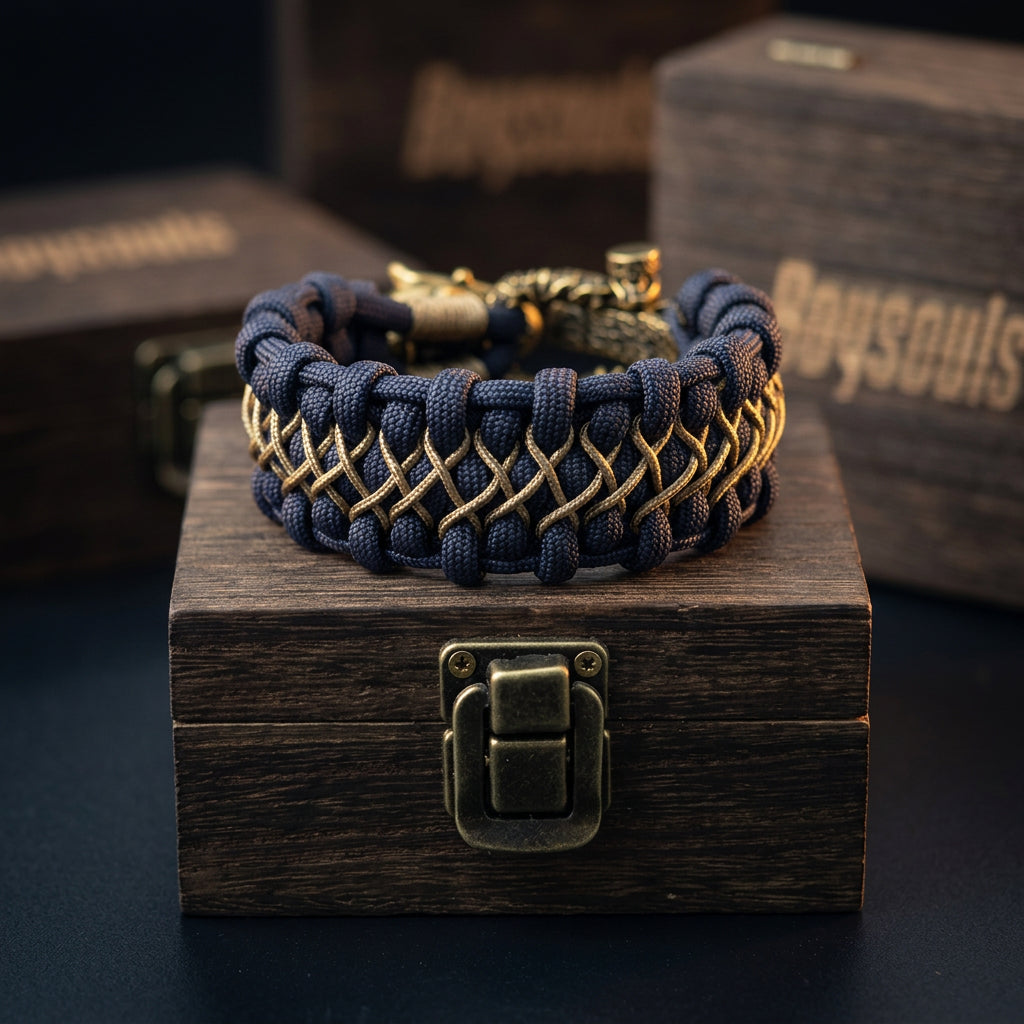
A truly premium paracord survival bracelet isn't just rope and a clasp—it’s hours of meticulous hand weaving, high-strength military-grade materials, artisanal finishing, and a piece of wearable preparedness. That price tag reflects real craft, not hype. Understanding where the money goes transforms sticker shock into appreciation.
Key Takeaways: Why Pay More?
- The best bracelets use genuine Mil-Spec 550 paracord with precisely 7 inner strands—not cheap imitations.
- Hand-weaving a single bracelet can take over 45 minutes versus seconds for machine-made.
- Solid brass, titanium, or stainless steel clasps cost 5–10x more than zinc alloy.
- You’re getting 10–16 feet of cord, not the 6–8 feet found in mass-produced versions.
- Craftsmanship makes it a durable heirloom, not a disposable accessory.
What Is a Premium Paracord Survival Bracelet?
A premium paracord bracelet is a handcrafted piece of functional jewelry made from authentic 550 paracord—the same cord used by U.S. paratroopers. Each bracelet is woven using specific knot patterns (cobra, fishtail, trilobite) that compress multiple feet of cord into a compact, wearable form. It unscrews or unclasps in seconds to reveal a life-saving tool: a full length of 550-pound tensile strength cord.
The difference from a $10 drugstore version? Everything. Premium bracelets use cord that meets MIL-C-5040H standards, not nylon filler. Artisans hand-tension every knot, resulting in a tight, even weave that won’t unravel. Clasps are machined from solid metal, not die-cast pot metal that snaps under load. It’s the difference between a Timex and a Swiss mechanical watch—both tell time, but only one carries generations of craft.
Why Premium Paracord Bracelet Value Matters for US Buyers
Americans are conditioned to equatetactical hear with affordability—but true preparedness isn’t cheap. In a world of planned obsolescence, a premium paracord bracelet stands out. It’s not a plastic gadget; it’s a deliberate investment, much like a hand-stitched leather wallet from a small workshop in Texas or a custom knife from a bladesmith in Oregon. You’re buying peace of mind and a story.
Price also signals reliability. If your life depends on cordage in a backcountry emergency, would you trust a mass-produced bracelet where the inner strands are loose polyester? Or one where each foot of cord has been inspected, and the weave has been tested to hold over 500 pounds? The premium option is built for the day you need it, even if that day never comes.
Key Benefits of Investing in a High-Quality Paracord Bracelet
- Survival-Ready Cordage: 10–16 feet of 550 lb test cord that can be used for shelter building, fishing line, splints, lashing gear, or emergency tourniquets.
- All-Day Comfort: Hand-weaving allows for a contoured fit without stiff joints or hot spots. High-end bracelets use burnished ends and smooth clasps.
- Heirloom Durability: Properly maintained, a brass- or titanium-class bracelet can last decades, developing a patina unique to your adventures.
- Style That Speaks: Subtle, masculine details—dark oxide brass, leather-threaded cores, minimalist weaves—elevate it from camping gear to refined EDC.
- Made in the USA Craft: Many premium bracelets are hand-tied by artisans in the U.S., supporting small businesses and eliminating sweatshop labor.
How to Choose a Paracord Bracelet That Justifies the Price
Don’t just look at the dollar amount. Evaluate what that money buys. Here’s a buyer’s guide to sorting real value from marketing.
1. Cord Quality
Insist on 100% nylon 550 paracord with 7 inner strands. Chinese clones often use polyester sheaths that melt under friction. Genuine 550 cord should feel slightly waxy and have a tight, round cross-section. Ask: “Is this MIL-SPEC rated?” If the brand can’t answer, walk away.
2. Clasp Material and Mechanism
The clasp is the weakest link on cheap bracelets. Premium versions use solid brass (often with a black oxide finish), surgical stainless steel, or titanium. Screw clasps offer added security—they won’t pop open when snagged. A high-quality clasp feels heavy, threads smoothly, and won’t corrode against sweat or saltwater.
3. Weave Complexity and Length
A tight king cobra or fishtail weave incorporates more cord per inch and takes significantly more labor. Ask how many feet of cord are in the bracelet. A standard cobra weave with 10 feet of paracord might take 30 minutes; a double-survival (“trilobite”) weave with 16 feet can take over an hour. More cord, more time, more value.
4. Handmade vs. Machine-Made
Handcrafted bracelets exhibit minor, consistent variations that show human touch—the tension is uniform but not robotic. Machine-made bracelets are often loomed from bulk cord with visible knots and weak points. If it looks too perfect and feels hollow, it’s probably machine-produced.
Price Breakdown: Cheap vs. Premium Paracord Bracelet
| Feature | Cheap / Mass-Produced ($5–$15) | Premium / Handcrafted ($50–$150+) |
|---|---|---|
| Paracord Type | Polyester knock-off, 4–6 strands | MIL-SPEC 550 nylon, 7-strand |
| Clasp | Zinc alloy, injection-molded | Solid brass, titanium, or stainless steel |
| Weave Density | Loose, uneven tension | Tight, hand-tensioned knots |
| Cord Length | 6–8 feet | 10–16 feet |
| Production | Machine in minutes | Handcrafted in 45–120 minutes |
| Longevity | Frays in months | Decades with patina |
| Emergency Reliability | Doubtful—snaps under real load | Proven 550 lb break strength |
Real-Life Scenarios: When Price Becomes Priceless
Weekend Backpacking Trip: Your tent pole snaps. With a premium bracelet, you unravel 12 feet of cord, lash a branch as a splint, and keep moving. A cheap bracelet would leave you with 6 feet of questionable twine.
Vehicle Emergency: Stuck in a snowstorm, you need to tie a tarp to your roof rack. The solid brass clasp of a high-end bracelet acts as a sturdy anchor point; the cord doesn’t stretch or snap under tension.
Daily Office Wear: It’s a conversation starter. The subtle black-oxide finish and braided texture pair with a business-casual button-down, signalling preparedness without looking tactical.
Gift for a Groomsman or Graduate: A handcrafted bracelet communicates more thought than a generic gadget. It says, “I value your safety and style.” The premium feel in-hand makes the gesture unforgettable.
Care Tips to Protect Your Investment
- Rinse after saltwater or sweat: Use fresh water and mild soap; avoid bleach.
- Dry completely: Air dry out of direct sunlight; never use a dryer.
- Brass clasp maintenance: Polish occasionally with a soft cloth if you prefer a shiny look. Otherwise, allow a natural protective patina to form.
- Inspect the weave: If you wear it daily, check for loose ends every few months. The beauty of handcraft is that a skilled artisan can often re-tighten if needed.
- Storage: Keep in a dry pouch away from sharp objects that could nick the cord.
Who Should Buy a Premium Paracord Bracelet?
- Outdoor Enthusiasts: Hikers, campers, hunters who understand that gear failure is not an option.
- EDC Collectors: Men who appreciate machining, leatherwork, and other functional art.
- Gift Givers: The person who wants to give something meaningful and lasting for Father’s Day, birthday, or milestone.
- Style-Conscious Minimalists: One rugged bracelet instead of five cheap ones that match nothing.
- Veterans & First Responders: Those who trust MIL-SPEC equipment because they’ve used it in the field.
Frequently Asked Questions
1. Why are some paracord bracelets over $50 while others are $10?
As the breakdown shows, materials and labor are worlds apart. A $10 bracelet sacrifices everything to hit a price point; a $50+ bracelet invests in your safety.
2. Does a more expensive bracelet really hold more cord?
Yes, and that extra length is priceless in emergencies. More cord means more options—fishing, shelter, first aid.
3. What makes a clasp high-quality on a paracord bracelet?
Solid metal, precision threading, and corrosion resistance. A cheap clasp can fail when you’re pulling it tight, turning a survival tool into a liability.
4. Can I wear a premium paracord bracelet every day without it falling apart?
Daily wear is no problem. The weave actually settles and becomes more comfortable over time, much like breaking in a pair of leather boots.
5. Is a handcrafted paracord bracelet worth it if I’m not a survivalist?
Even in urban life, you’ll be amazed how often sturdy cord comes in handy. Plus, the craftsmanship makes it a signature piece that works with everything from jeans to chinos.
Conclusion: Value Beyond the Sticker
A premium paracord bracelet may cost more upfront, but it’s fundamentally a different category of product than the mass-market alternative. You’re paying for a handmade tool, an emergency resource, and a wearable piece of American craft. Next time you see a higher price, remember: it’s not just rope—it’s labor, material integrity, and the confidence that it won’t fail when it’s the only thing standing between you and a bad situation.
Ready to experience the difference? Explore our handcrafted survival bracelets and choose a piece that’s built to last a lifetime—not just a season.
Share:
Why Premium Paracord Survival Bracelets Cost More—and Why They're Worth Every Penny
Why Handmade Paracord Bracelets Cost More: The Hidden Value Behind Premium Survival Gear