

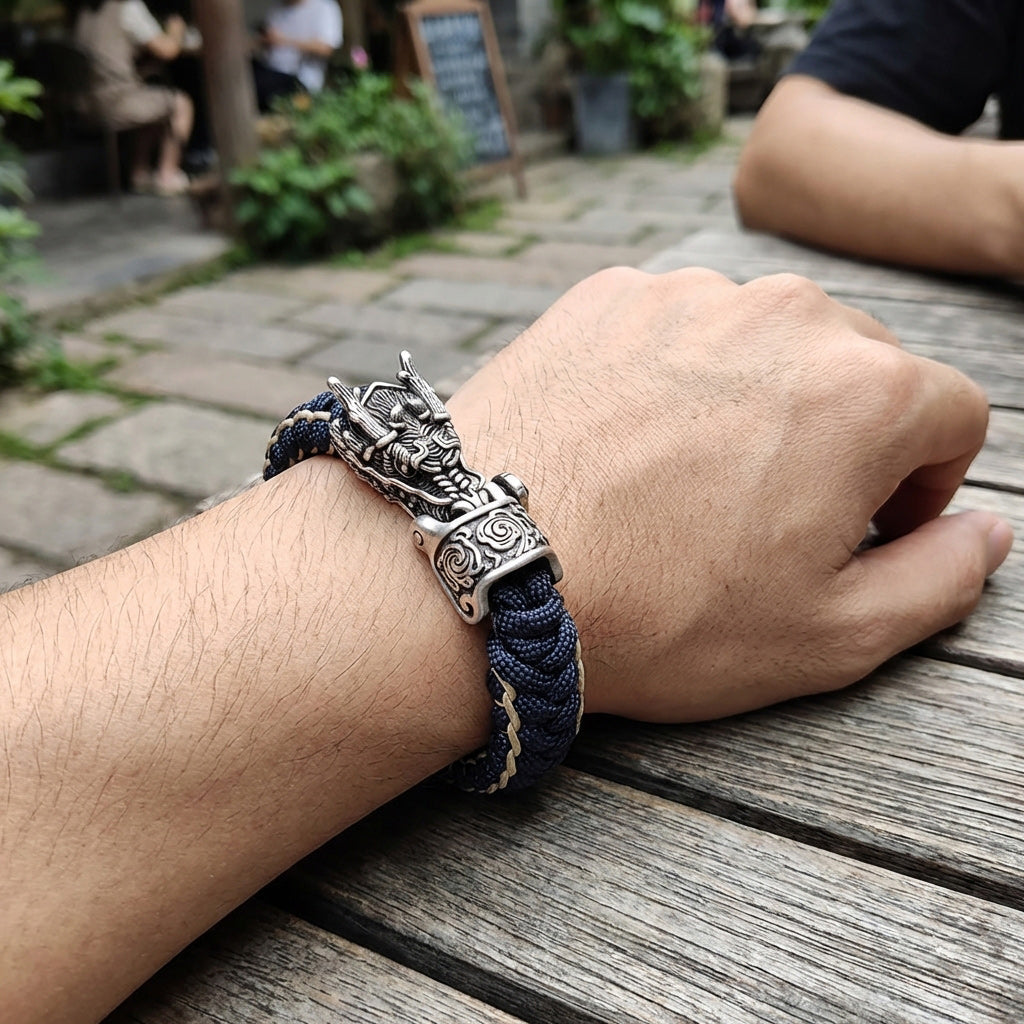
The Truth About Premium Paracord Bracelet Pricing
Yes, a $40 paracord bracelet costs more than the $10 mass-produced version. That price jump isn’t a markup—it’s a direct reflection of American labor, military-grade materials, and handcrafted precision. You’re paying for a functional piece of survival gear that doubles as a rugged accessory, not a plastic charm.
Key Takeaways
- Premium paracord bracelets use real 550 Type III paracord with 7 inner strands—survival-ready, not decorative.
- Hand-knotting takes 30–60 minutes per bracelet by a skilled artisan; mass production uses machines and cheap cord.
- Hardware like solid brass or cupronickel screw clasps resists corrosion and adds heirloom durability.
- The price protects U.S. cottage industry jobs and ensures you can trust the bracelet in an emergency.
- A quality bracelet should last 5+ years of daily wear; cheap ones fray in months.
What Is a Premium Paracord Bracelet?
A premium paracord bracelet isn’t a mass-produced accessory you grab from a big-box bin. It’s constructed from genuine 550 paracord—the same cordage that can hold 550 lbs of static weight and unravels into dozens of feet of emergency line. BoySouls bracelets, for instance, use only mil-spec paracord sourced from U.S. suppliers, and each knot is tightened by hand.
The bracelet itself is a wearable toolkit: 10–15 feet of durable cordage, often paired with a ferro rod, whistle, or compass integrated into the clasp. That’s the kind of utility that turns a bracelet into a personal insurance policy.
Why Premium Paracord Costs More: The Craft, Materials, and Labor
Think of a premium paracord bracelet like a custom Benchmade knife or a hand-stitched Filson bag. The sticker price reflects hours of skilled labor, not a celebrity logo.
Materials Are Everything. Genuine 550 paracord has a nylon sheath surrounding 7–9 inner yarns. Cheap imports often have 3–4 strands, no strength rating, and a waxy feel that melts near a campfire. BoySouls uses only U.S. government-rated cord. Solid brass or cupronickel hardware won’t rust—unlike the plated pot metal in $12 versions that turns green in a month.
Labor Is the Invisible Luxury. A single classic cobra weave bracelet takes a trained maker 30–45 minutes of uninterrupted handwork. Complex patterns like the fishtail or dragon tongue push that to an hour. Machines can’t replicate the consistent tension that keeps a bracelet from loosening over time. When you buy from a brand like BoySouls, you’re paying for a craftsperson’s mortgage, not a robotic arm in a Shenzhen factory.
Rarity and Customization. Limited-run colorways, custom beadwork, or personalized engravings mean every piece is essentially bespoke. Unlike mass retailers that make 50,000 identical units, a handcrafted batch might be 50. That scarcity adds value beyond simple utility.
Why This Matters for Survival and Style
A premium bracelet isn’t just for Instagram trail selfies—it’s a silent partner in the wild. When you’re miles from a trailhead with a broken shoelace or a snapped tent line, 12 feet of paracord can be the difference between a bad story and a dangerous situation. The bracelet sits on your wrist 24/7, so you never forget your cordage.
And yes, style counts. The matte finish of quality brass, the crisp weave of a two-tone cobra knot, the subtle heft—these things signal that you know the difference between outdoor cosplay and authentic gear. In a world of plastic smartwatches, a well-made bracelet says “I prepare, not post.”
Key Benefits of Investing in a Quality Paracord Bracelet
- True emergency readiness: 10–15 feet of 550 cord rated to hold your body weight in a pinch.
- Durability that ages well: Solid brass develops a patina; the paracord won’t fray under UV exposure like cheap nylon.
- Unboxing experience: Hand-wrapped packaging, maker’s card, and care instructions—not a plastic bag from a flea market.
- Adjustable fit: Screw or magnetic clasps sized to your wrist, not one-size-fits-none elastic.
- Supporting American artisans: Your purchase keeps a small workshop running instead of adding to landfill-bound fast fashion.
Buying Guide: How to Spot True Value
Not all expensive bracelets are created equal. Here’s what to look for so you don’t pay a premium for a counterfeit.
- Read the cord spec: It must say “550 Type III paracord” or “mil-spec.” If it just says “paracord,” walk away.
- Check the hardware: Solid brass or cupronickel has a satisfying weight and no magnetic pull. Light, shiny clasps are often zinc alloy.
- Inspect the weave: Knots should be tight, uniform, and flush. Any gaps or loose strands indicate rushed work.
- Ask about the inner strands: A premium bracelet has 7 core yarns. Inferior cord has fewer and thicker fibers that don’t unravel smoothly.
- Look for a warranty or guarantee: Brands that stand behind their products typically offer repair or replacement if a clasp fails.
Comparison Table: Mass-Produced vs. Handcrafted Paracord Bracelets
| Feature | Mass-Produced Bracelet | Premium Handcrafted Bracelet |
|---|---|---|
| Cord type | Unknown nylon, no strength rating | 550 Type III mil-spec paracord |
| Inner strands | 3–4 thick fibers | 7–9 fine yarns for versatile use |
| Hardware | Plated zinc alloy, rust prone | Solid brass or cupronickel, corrosion resistant |
| Build time | Machine-woven in minutes | 30–60 min hand-knotting |
| Lifespan | 6–12 months with daily wear | 5+ years, develops character |
| Emergency reliability | Not load-rated; may snap | Rated to 550 lbs; trusted in real survival situations |
| Fit | One-size elastic, can slide off | Custom-sized screw clasp, secure and comfortable |
Real-Life Scenarios: When a Premium Bracelet Pays Off
Backcountry breakdown. Your backpack’s sternum strap buckle shatters on a rocky descent. Unraveling 8 feet of paracord from your wrist lets you lash the strap back together in 60 seconds—no sewing kit needed.
Urban emergency. A buddy’s car door gets stuck in a snowstorm. Using the inner strands, you makeshift a pull cord to bridge a gap and signal for help. The 550 lb test means you can even tow a lightweight sled if necessary.
Gift that builds confidence. You give a premium bracelet to a new hiker. They roll their eyes until they use it to hang a bear bag on their first overnight trip. Suddenly, they understand why quality matters.
Care Tips to Make Your Bracelet Last
- Rinse after saltwater or mud: Quick fresh water rinse keeps hardware from pitting.
- Avoid prolonged chlorine: Pool chemicals degrade nylon over time.
- Re-tighten the clasp regularly: Screw clasps can loosen with motion; a simple twist once a week prevents loss.
- Sun exposure: All nylon eventually fades, but storing out of direct UV when not worn preserves color.
- Don’t cut it unless you must: Practice unwrapping on a spare piece, not your daily bracelet.
FAQ
Why are some paracord bracelets $5 and others $50?
The $5 version uses weak cord and plated clasps, mass-produced overseas. The $50 bracelet uses genuine 550 cord, solid brass hardware, and is knotted by hand in the USA. You’re paying for survival-grade reliability and artisan labor.
Is a paracord bracelet really useful in an emergency?
Absolutely. Beyond obvious uses like tying shelters or splints, the inner strands can become fishing line, thread for repairing gear, or even dental floss. A premium bracelet holds enough cord to replace a boot lace or create a tourniquet.
How much paracord is in a typical BoySouls bracelet?
Most men’s bracelets from BoySouls contain 10–14 feet of cord, depending on wrist size and weave pattern. It’s enough to rig a tarp shelter or lower a small item from a height.
Does the hardware tarnish or rust?
Solid brass and cupronickel develop a natural patina over time—that’s a desirable aged look, not damage. They won’t rust or turn your skin green like cheap zinc alloys.
Can I swim or shower with a premium bracelet?
Yes. The materials withstand water, sweat, and daily showers. Rinse with fresh water and let it air dry to maximize lifespan. Avoid harsh soaps that could dry out the nylon fibers.
How do I know if a bracelet is handmade?
Look for slight variations in knot tension—that’s proof of human touch. A perfectly uniform, too-shiny weave is often machine-made. Buy from brands that share behind-the-scenes of their workshop, like BoySouls’ maker videos.
Who Should Buy a Premium Paracord Bracelet?
This isn’t a product for everyone. It’s for the hunter who trusts his gear with his life, the hiker who plans for the worst while chasing the best views, and the dad who wants a gift that says “I believe in your adventures.” It’s for anyone tired of replacing cheap bracelets every season and ready to own one piece that tells a story. If you appreciate the difference between a mass-produced multi-tool and a Leatherman, you’ll appreciate a BoySouls bracelet.
Your Wrist, Your Insurance Policy
Premium paracord bracelets don’t just look tough—they are tough. The price honors the craft, the American maker, and the unspoken promise that when things go sideways, your bracelet is ready to work. Sticker shock fades; a reliable piece of gear stays with you for years.
Ready to experience the difference? Explore the full BoySouls collection of handcrafted paracord bracelets—built for the wild, designed for daily wear.
Share:
Why Premium Paracord Bracelets Cost More: Unraveling the Craft, Materials & Value
Handmade Paracord Bracelets: Price vs. Survival Value