

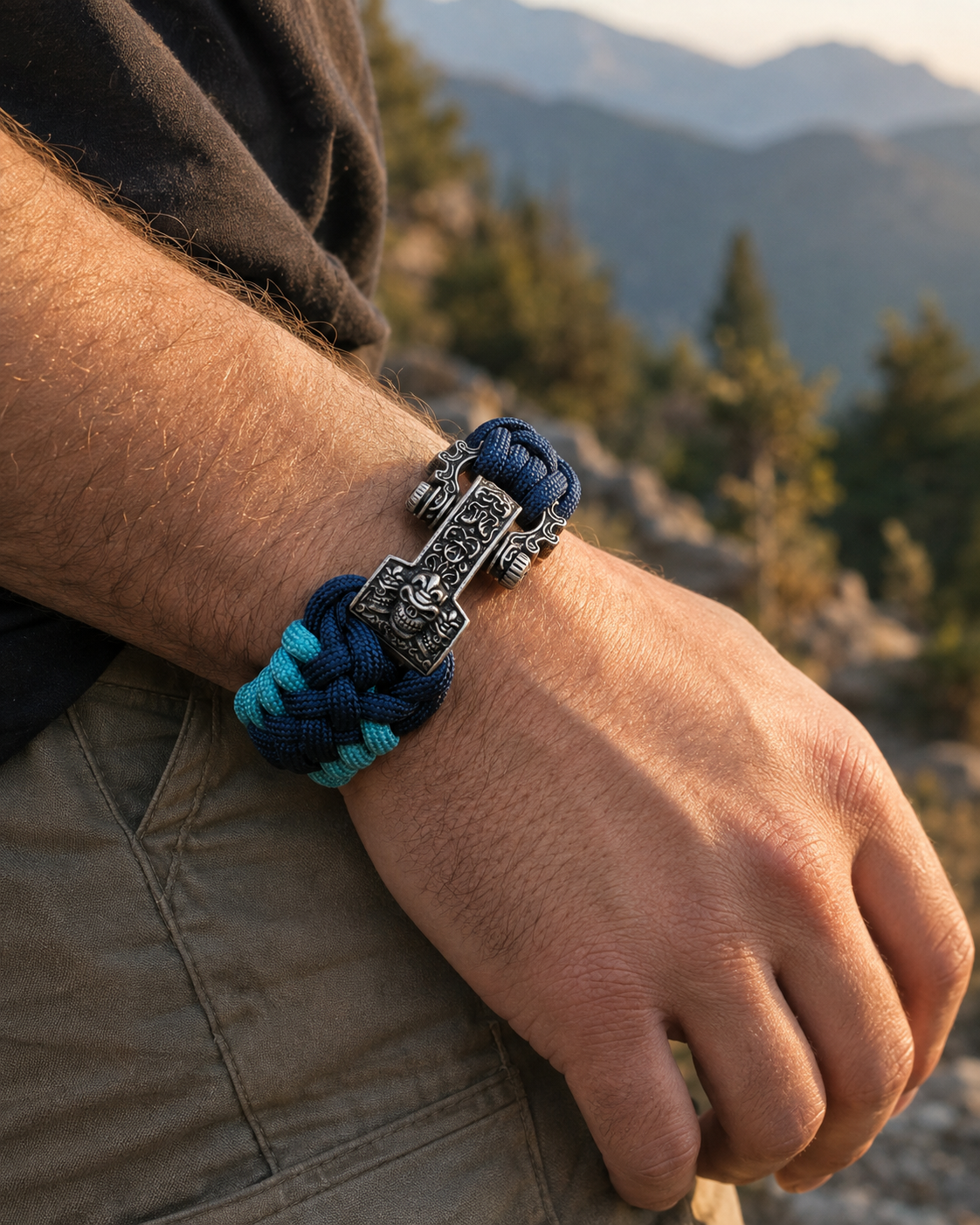
Handmade Paracord Bracelet: Built for Trail Confidence
A handmade paracord bracelet is a wearable length of cord, woven to be useful, personal, and ready for the trail. Often called a survival bracelet, it can be a practical companion when you are hiking, camping, or organizing everyday carry gear—but its real value starts with thoughtful construction, not exaggerated promises.
For American outdoor enthusiasts, a bracelet made from paracord sits at the intersection of function and style. It is like carrying a compact multitool: not a replacement for proper outdoor survival equipment, but a small, accessible layer of preparedness that also tells a story about how it was made.
Key Takeaways
- A paracord bracelet comes from parachute-cord traditions, then becomes something more personal through hand weaving and design.
- The exact history is shared rather than owned by one inventor; military cord, outdoor communities, and makers all shaped the modern style.
- Weave choice, sizing, cord quality, and closure design matter more than tactical-looking decoration.
- A paracord bracelet with metal clasp can make daily wear easier, while a custom paracord bracelet can reflect the wearer’s routine and style.
- For hiking accessories and men’s EDC gear, choose a bracelet as a useful supplement—not as your only emergency plan.
What Are the Survival Bracelet Origins?
The survival bracelet origins are rooted in a simple human habit: people have long carried useful materials in forms that are close at hand. Rope has secured gear, repaired straps, tied shelters, and organized supplies for centuries. Turning cord into something wearable is a natural extension of that practical instinct.
The modern paracord bracelet became especially familiar through military-inspired gear culture and the rise of outdoor recreation. Veterans, campers, scouts, climbers, and makers helped turn surplus-style cord into a compact accessory. Over time, the bracelet moved beyond utility stores and became part of American everyday style—seen at trailheads, workshops, road trips, and weekend cookouts.
That history matters because it keeps the product honest. A bracelet is not a shortcut around training, navigation, weather planning, first aid, or carrying appropriate equipment. Instead, it represents a readiness mindset: keep useful things close, understand what they can do, and avoid depending on one item for every problem.
For a beginner, think of it like a spare shoelace with more possibilities. In a non-emergency setting, a length of cord may help bundle a loose item, organize a small kit, or make a temporary tie. The right use depends on the cord, the situation, local conditions, and your own judgment.
What Does Paracord History Military Service Teach Today’s Makers?
Paracord history military service is connected to the use of lightweight nylon cord in parachute systems. Service members recognized that durable cord could be useful beyond its original purpose, and that practical attitude became part of outdoor culture. The material’s reputation grew through real-world familiarity, not because every bracelet was designed as a complete survival system.
Today’s makers should respect that legacy without turning it into a costume. A tactical paracord bracelet should be designed with clean weaving, comfortable wear, reliable closure hardware, and a clear understanding of its materials. Calling every bracelet “military grade” without evidence is not heritage; it is marketing noise.
The best modern interpretation is more considered. It takes inspiration from the disciplined habit of maintaining equipment, then adapts it for everyday life in the United States. A commuter may wear one as low-key men’s EDC gear. A hiker may pair one with a map, water, rain layer, headlamp, and first-aid kit. A gift buyer may choose one because it feels more intentional than a generic accessory.
That is why handmade work matters. The cord is familiar, but the maker decides how the strands lie, how the edges feel against skin, how the clasp operates, and whether the finished piece looks at home with a field watch, flannel shirt, or lightweight hiking shell.
Who Invented the Paracord Bracelet?
The most accurate answer to “who invented paracord bracelet” is that there is no universally documented single inventor. Parachute cord has a military history, while knotted and braided wearable cord developed through many communities: service members, survival instructors, scouts, outdoor hobbyists, and independent craftspeople.
That shared origin is part of the appeal. The modern bracelet is not a museum relic copied from one source. It is a living design language shaped by people who value practical materials. Different makers developed different closures, weave patterns, color combinations, and ways of integrating small accessories.
Some popular designs use the cobra weave, a flat, repeating knot pattern that creates a balanced, comfortable band. The king cobra style adds an additional layer over a base weave, producing a thicker and more dimensional profile. Neither pattern is automatically better; the right choice depends on wrist comfort, personal style, and how much visual weight you want.
A slimmer cobra weave can fit easily under a jacket cuff and work well as daily EDC. A king cobra bracelet has more presence and suits buyers who want a bolder, more rugged look. In both cases, craft shows up in consistency. The rows should sit evenly, the tension should feel controlled, and the closure should not become an afterthought.
How Does Outdoor Gear Craftsmanship Turn Cord Into a Bracelet Worth Wearing?
Outdoor gear craftsmanship is not only about making something look rugged. It is the discipline of making choices that hold up to repeated use: selecting appropriate cord, planning the weave, measuring the wrist accurately, managing tension, finishing ends cleanly, and checking the closure before the bracelet reaches its owner.
At the workbench, a handmade paracord bracelet begins with proportion. A maker measures the intended fit, allows for the thickness of the weave, and chooses a pattern that will not feel overly bulky. Too loose, and the bracelet twists or catches. Too tight, and it becomes distracting on a long drive or hike.
Then comes tension. Each pass of cord needs to be snug enough to form a stable pattern but not pulled so hard that the band buckles. It is similar to tuning a guitar string: the goal is not simply maximum tightness; it is balanced tension that creates a clean result.
Closure is equally important. A paracord bracelet with metal clasp can offer a more polished, secure-feeling finish than a basic plastic buckle, especially for buyers who want their bracelet to move easily between outdoor use and everyday outfits. The metal itself should feel smooth, operate predictably, and complement the scale of the weave.
Finally, the piece is inspected as something a person will actually wear. Does it lie flat? Are the edges comfortable? Does the clasp open and close cleanly? Does the design feel useful without pretending to solve every outdoor problem? Those questions separate careful handwork from a bracelet that merely copies the look of tactical gear.
Why Choose a Custom Paracord Bracelet for Hiking and Men’s EDC Gear?
A custom paracord bracelet gives the wearer choices that mass-produced accessories often ignore: wrist fit, weave profile, color direction, and closure preference. For premium lifestyle buyers, those details are not cosmetic extras. They determine whether a bracelet becomes part of a daily routine or stays in a drawer.
For hiking, neutral earth tones can blend naturally with outdoor clothing, while brighter accents can make a personal kit easier to identify. For everyday wear, black, charcoal, olive, and deep navy often pair easily with denim, boots, watches, and casual workwear. The point is not to look like you are headed into a disaster scenario; it is to wear a well-made object that suits the life you actually live.
| Bracelet approach | Best for | What to evaluate |
|---|---|---|
| Cobra weave | Everyday wear and lighter hiking accessories | Comfort, even rows, low-profile fit |
| King cobra | Bolder style and a fuller wrist presence | Bulk, flexibility, fit under sleeves |
| Paracord bracelet with metal clasp | Frequent on-and-off wear | Clasp feel, finish, closure reliability |
| Custom paracord bracelet | Gifts, specific sizing, personal style | Wrist measurement, color, weave, hardware |
| Tactical paracord bracelet | Outdoor-inspired EDC style | Construction quality and realistic utility claims |
A bracelet should complement a broader kit. If you are planning a day hike, prioritize water, navigation, weather protection, communication, food, and first aid. Add a paracord bracelet as a compact, wearable piece of outdoor readiness—not as a substitute for the essentials.
When you want a design that balances function with a refined finish, Discover tactical paracord bracelets designed for everyday wear and outdoor-minded routines.
How Should You Judge a Tactical Paracord Bracelet Before Buying?
Start with construction, not labels. “Tactical” can describe an aesthetic, but it does not automatically prove durability, safety, or emergency capability. Look closely at the weave, the edges, the closure, and the product details supplied by the seller.
- Check the fit: Use the seller’s sizing guidance and account for the thickness of the weave.
- Look at the pattern: A tidy cobra weave or king cobra pattern should have consistent spacing and no visibly loose sections.
- Evaluate the clasp: A metal clasp should feel smooth and substantial without sharp edges or awkward bulk.
- Read material claims carefully: Do not assume cord type, strength rating, or special features unless the brand specifically confirms them.
- Match it to your routine: Choose a profile you will genuinely wear, whether that means hiking, travel, workshop time, or daily EDC.
For outdoor survival planning, keep expectations realistic. A bracelet may offer accessible cord in some situations, but it cannot replace a repair kit, climbing-rated rope, a medical kit, or professional advice. Good design includes clear limits as well as useful possibilities.
If you are assembling a broader trail or travel setup, Explore our survival gear and build your kit around the conditions you expect to face.
FAQ: Paracord Bracelet Craft, History, and Use
What are the survival bracelet origins?
Survival bracelets grew from the practical idea of carrying usable cord in a wearable form. Their modern popularity was shaped by military-inspired cord culture, outdoor recreation, scouting, and independent makers rather than one single origin story.
What is the connection between paracord history military use and modern bracelets?
Paracord became associated with military use because lightweight nylon cord was used in parachute systems and appreciated for practical tasks. Modern bracelets borrow that material tradition, but a bracelet should not be treated as a complete emergency kit.
Who invented paracord bracelet designs?
No universally accepted single inventor is documented. Modern designs emerged through shared contributions from service members, outdoor communities, knot enthusiasts, and craftspeople who adapted cord into wearable forms.
Is a paracord bracelet with metal clasp better than a plastic buckle?
Neither is automatically better for every buyer. A metal clasp can offer a more refined look and convenient daily wear, while the best choice depends on comfort, closure quality, bracelet size, and the style you prefer.
What is the difference between a cobra weave and a king cobra weave?
A cobra weave is a classic flat, repeating braid that keeps a relatively streamlined profile. A king cobra weave adds a second layer over the base, creating a thicker bracelet with a more pronounced, rugged appearance.
Can a custom paracord bracelet be used for outdoor survival?
It may provide accessible cord for limited, situation-dependent tasks, but it should be only one small part of responsible preparedness. Carry proper navigation, hydration, clothing, communication, first aid, and task-specific equipment for your trip.
From Useful Material to Personal Ritual
A handmade paracord bracelet carries a quiet kind of heritage. It begins with a material linked to practical problem-solving, passes through the hands of a maker who controls every weave, and ends on the wrist of someone who values both utility and character.
For the American buyer who appreciates outdoor survival readiness, refined hiking accessories, and meaningful men’s EDC gear, that combination is compelling. Choose the pattern that fits your life, the closure you enjoy using, and the level of craftsmanship you can feel every time you fasten it.
A well-made bracelet will not promise the impossible. It will simply give you a durable-looking, thoughtfully constructed reminder to stay prepared, move with intention, and bring a little of the trail into everyday life.
Explore Our Collection
Ready to experience the world of paracord bracelet? Browse our curated collection:
Disclaimer: This article is for informational purposes. Products and pricing subject to change.
What should readers know before using Boysouls paracord accessories?
Direct answer: Boysouls paracord bracelets and keychains are designed for everyday carry, outdoor style, light utility, and gift use. Boysouls paracord accessories are not certified climbing, towing, rescue, medical, or life-safety equipment.
Use each product page as the source of truth for listed material details, size options, clasp or ring style, current price, shipping timing, returns, and care guidance.
Share:
Inside a Handmade Paracord Bracelet: Craft That Goes Hiking
Paracord Bracelet Craft: Built for Everyday Adventure