

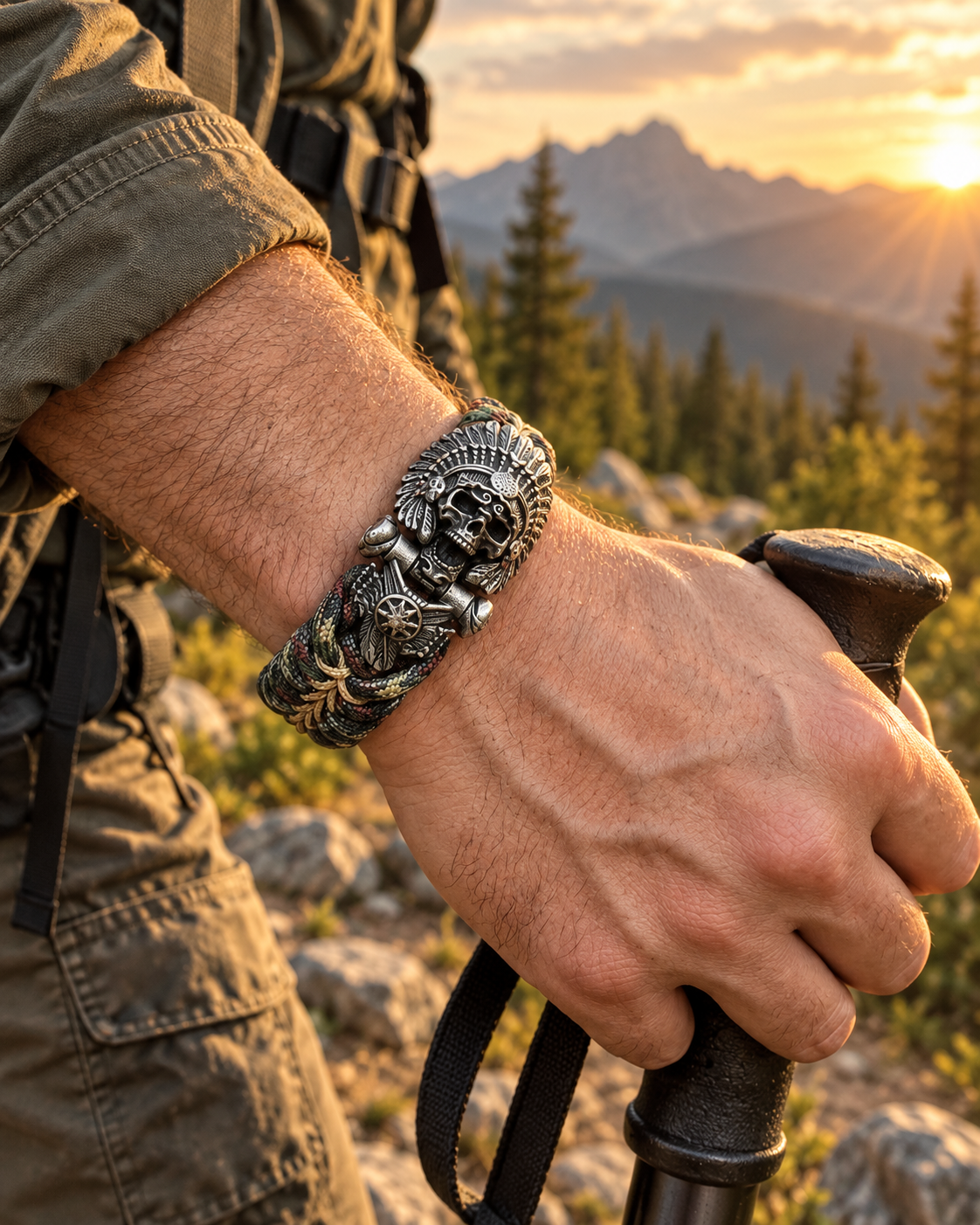
Paracord Bracelet Craft: Built for Everyday Adventure
A handmade paracord bracelet is a practical piece of wearable cordage, shaped into a personal everyday accessory for moments from a weekend hiking trip to a daily commute. Often called a survival bracelet, it brings the useful mindset of outdoor gear into a form that feels at home beside a watch, denim jacket, or trail pack.
The best versions are not defined by a dramatic promise. They are defined by thoughtful materials, secure construction, comfortable fit, and the quiet confidence of carrying something made with purpose.

Key Takeaways
- A paracord bracelet turns a length of woven nylon cord into useful, wearable EDC gear.
- Paracord history military roots explain the material's reputation, but modern bracelet design is largely an outdoor and maker-community tradition.
- Craft matters: braid pattern, tension, clasp choice, and sizing affect comfort and durability.
- “Military grade paracord” is not a universal guarantee; check the actual cord type and construction details.
- A well-chosen bracelet can be both a rugged men's accessory and a meaningful piece of practical gear.
What does paracord history military tradition teach us about a modern bracelet?
Paracord began as parachute suspension line used by the U.S. military. The familiar term “550 cord” refers to a type of nylon cord historically associated with a 550-pound minimum breaking-strength specification. Its value was simple: it was lightweight, flexible, compact, and useful in many field situations.
That origin matters because it gives the material a real story. It does not mean every cord bracelet is military-issued, emergency-certified, or appropriate for every high-load task. A bracelet is primarily a compact, wearable form of cordage. Think of it like carrying a multitool keychain: its usefulness comes from being accessible, not from replacing specialized climbing or rescue equipment.
For American outdoor culture, that balance has lasting appeal. Hikers, campers, anglers, and road-trip travelers often appreciate gear that earns its space. A paracord bracelet takes up almost no room, yet its material history speaks to readiness, self-reliance, and respect for the outdoors.
At the workshop level, that heritage changes how we build. Each bracelet starts with cord selected for texture, color, and intended wear. The maker measures the wrist, plans the braid, checks the clasp, and keeps tension consistent from the first pass to the final finish. The result should feel intentional rather than merely decorative.
What are the survival bracelet origins, and why did makers turn cord into men's accessories?
The survival bracelet origins are less about one official invention than about practical adaptation. People who spent time outdoors already understood that cord was useful. Makers and enthusiasts eventually began weaving it into wristwear so a manageable length could travel with the wearer.
That shift is easy to understand. A loose coil of cord can disappear into the bottom of a bag. A bracelet stays visible, accessible, and personal. It also gave outdoor communities a way to recognize shared values: preparedness, craftsmanship, adventure, and a preference for useful objects over disposable ones.
Today, the category has expanded beyond the trail. A paracord bracelet can sit naturally within modern men's accessories because it has texture and character without needing to be flashy. Neutral black, charcoal, olive, and sand tones work with everyday clothing, while brighter cord can mark a team, trip, memory, or personal style.
Its cultural meaning is not fixed. For one person, it is a hiking companion. For another, it is EDC gear for a car kit or travel bag. For someone buying a gift, it can be a small signal that says, “I know you like things that are made to be used.”
Who invented paracord bracelet designs as we know them today?
There is no reliably documented single person who invented the paracord bracelet. The material came from parachute-cord traditions, while the bracelet form developed through outdoor enthusiasts, military-adjacent communities, scouts, survival-minded hobbyists, and independent makers.
That shared origin is part of the appeal. Rather than belonging to one designer, the form evolved through repeated hands-on improvements: better buckle options, stronger closures, more comfortable proportions, cleaner edge finishing, and braid patterns that use cord efficiently.
Two patterns appear often in the maker vocabulary. The fishtail braid has a flatter, more streamlined profile that can suit daily wear and smaller wrists. The king cobra style is fuller and more dimensional, creating a bolder presence and often holding more cord. Neither is automatically “better.” The right choice depends on wrist size, desired bulk, color contrast, and how the bracelet will be worn.
This is where an artisan approach makes a difference. A maker does not simply repeat a pattern. They decide whether a braid will sit flat, whether the knot tension will stay even, whether the closure will catch on a sleeve, and whether the finished bracelet feels balanced on the wrist.
How does outdoor gear craftsmanship change the way a paracord bracelet is made?
Outdoor gear craftsmanship is the discipline of treating small details as functional decisions. In a handmade bracelet, that begins before any braid is visible. The cord is cut with enough allowance for the chosen weave, the ends are heat-finished carefully, and the maker works to maintain a steady tension throughout.
Uneven tension can create pressure points, twist the bracelet, or make one side look thicker than the other. A poorly selected clasp can pinch, loosen too easily, or feel out of place with the cord. These details may sound minor, but they are the difference between something that stays in a drawer and something worn every day.
| Craft decision | Why it matters | Best for |
|---|---|---|
| Fishtail braid | Lower profile and flexible feel | Daily wear, layering with a watch |
| King cobra weave | More visual depth and a substantial look | Statement EDC gear and outdoor style |
| Adjustable closure | Allows a more personalized fit | Gifts and changing wrist comfort preferences |
| Metal clasp | Adds a refined, durable finishing point | Premium everyday men's accessories |
A maker also has to be honest about materials. The phrase military grade paracord is commonly used in product descriptions, but it should not be treated as a regulated universal standard. If load strength is important to you, look for transparent information about cord type, diameter, construction, and manufacturer specifications. Never use bracelet cord as a substitute for certified climbing, rappelling, rescue, or life-safety rope.
Good craftsmanship includes clear limits. Practical gear earns trust by being described accurately.
Why choose an adjustable paracord bracelet or a paracord bracelet with metal clasp?
Fit determines whether a bracelet becomes part of your routine. An adjustable paracord bracelet is useful when you prefer flexibility, wear your bracelet over different layers, or are shopping for someone else. It can help accommodate small changes in comfort without making the bracelet look oversized.
A paracord bracelet with metal clasp offers a different experience. The clasp creates a clear visual anchor and can elevate the bracelet from purely tactical gear to a refined piece of daily EDC. It is especially appealing for premium lifestyle buyers who want rugged texture without the look of a plastic utility buckle.
Choose based on how you actually live:
- Choose adjustable when giftability and fit flexibility matter most.
- Choose a metal clasp when you want a cleaner, more polished finish.
- Choose a flatter braid when you wear a watch or prefer understated style.
- Choose a fuller weave when you want the bracelet to be a visible part of your outdoor look.
For a complete pocket-and-pack system, a matching Browse paracord keychains option can extend the same material language to keys, zipper pulls, or a daypack. For wristwear built around a more rugged silhouette, Discover tactical paracord bracelets designed for daily carry and outdoor use.

How can a handmade paracord bracelet fit American outdoor life without becoming costume gear?
The strongest designs avoid pretending that every errand is a survival mission. In the United States, outdoor life can mean a national-park hike, an afternoon at the lake, a weekend campsite, a dog walk, or a long drive between cities. A useful accessory should suit those real situations.
That is why restrained design works. A bracelet in deep green, black, gray, or earth brown can pair with workwear, flannel, technical outerwear, or a simple T-shirt. It can complement other EDC gear without making the wearer look overloaded with tactical gear.
Craft gives the piece credibility. A clean braid, well-finished ends, and a reliable clasp show attention without requiring a logo to do all the talking. In that sense, the bracelet is like a well-made leather belt or field watch: practical enough to use, refined enough to become part of a personal uniform.
The same thinking applies to a paracord keychain. It can organize a daily carry setup, add grip to a bag zipper, and keep a handmade material close at hand. The utility is modest but real; the visual effect is confident and personal.
What should you look for before buying a handmade paracord bracelet?
Start with the construction, not just the color. Ask what cord is used, what braid pattern is chosen, and how the bracelet closes. Look at product photos closely for even spacing, centered hardware, smooth heat-finished ends, and proportions that make sense for the stated wrist size.
- Fit: Measure your wrist and follow the maker's sizing guidance; do not assume one size fits every wrist.
- Comfort: Consider braid thickness if you wear a watch, work at a keyboard, or prefer low-profile accessories.
- Hardware: Check whether the clasp is adjustable, metal, buckle-based, magnetic, or knotted.
- Material clarity: Look for specific cord and hardware details rather than vague performance claims.
- Use case: Buy for daily carry, style, and light practical readiness—not certified life-safety applications.
A handmade bracelet is worth choosing when the details support the story. You are not only buying cord around a wrist. You are choosing a small object built to travel through ordinary days and memorable weekends alike.
Frequently Asked Questions
What is the paracord history military connection?
Paracord developed from nylon parachute-suspension line used by the U.S. military. Its lightweight, flexible construction made it useful for many general field tasks, which later inspired civilian outdoor and EDC uses.
What are the survival bracelet origins?
Survival bracelets emerged from outdoor, scouting, military-adjacent, and maker communities that wanted to carry woven cord in a compact, wearable format. They evolved through shared practice rather than one official product launch.
Who invented paracord bracelet designs?
No single inventor is reliably documented for the modern paracord bracelet. The design developed collectively as makers adapted parachute cord into different wristwear patterns and closures.
Is military grade paracord always 550 cord?
No. “Military grade” is often a marketing phrase, not a universal certification. Confirm the cord type and maker specifications if strength or construction matters, and do not use bracelet cord for climbing or rescue.
What is the difference between a fishtail braid and king cobra bracelet?
A fishtail braid is generally flatter and more understated. A king cobra weave is thicker and more pronounced, making it better for people who want a bolder paracord bracelet look.
Is an adjustable paracord bracelet a good gift?
Yes. Adjustability can reduce sizing uncertainty, making it a practical option for gifting. Still, review the product's stated size range and closure style before ordering.
Why choose a paracord bracelet with metal clasp?
A metal clasp can provide a more premium visual finish and a distinct closure experience. It is a strong option if you want the rugged texture of paracord with a more polished everyday style.
Built by Hand, Ready for Your Story
A paracord bracelet is most compelling when it respects both sides of its identity: a material with military roots and an object shaped by modern outdoor gear craftsmanship. It can be useful without exaggeration, stylish without being delicate, and personal without being precious.
Choose the braid, fit, and closure that match your routine. Whether your next destination is a trailhead, a backyard fire, or simply another busy weekday, handmade EDC gear can remind you that practical things deserve to be made well.
Explore Our Collection
Ready to experience the world of paracord bracelet? Browse our curated collection:
Disclaimer: This article is for informational purposes. Products and pricing subject to change.
What should readers know before using Boysouls paracord accessories?
Direct answer: Boysouls paracord bracelets and keychains are designed for everyday carry, outdoor style, light utility, and gift use. Boysouls paracord accessories are not certified climbing, towing, rescue, medical, or life-safety equipment.
Use each product page as the source of truth for listed material details, size options, clasp or ring style, current price, shipping timing, returns, and care guidance.
Share:
Handmade Paracord Bracelet: Built for Trail Confidence
Nylon-Core 550 vs. Polyester-Filled Paracord Bracelet: Which One Belongs in Your Hiking Kit?