

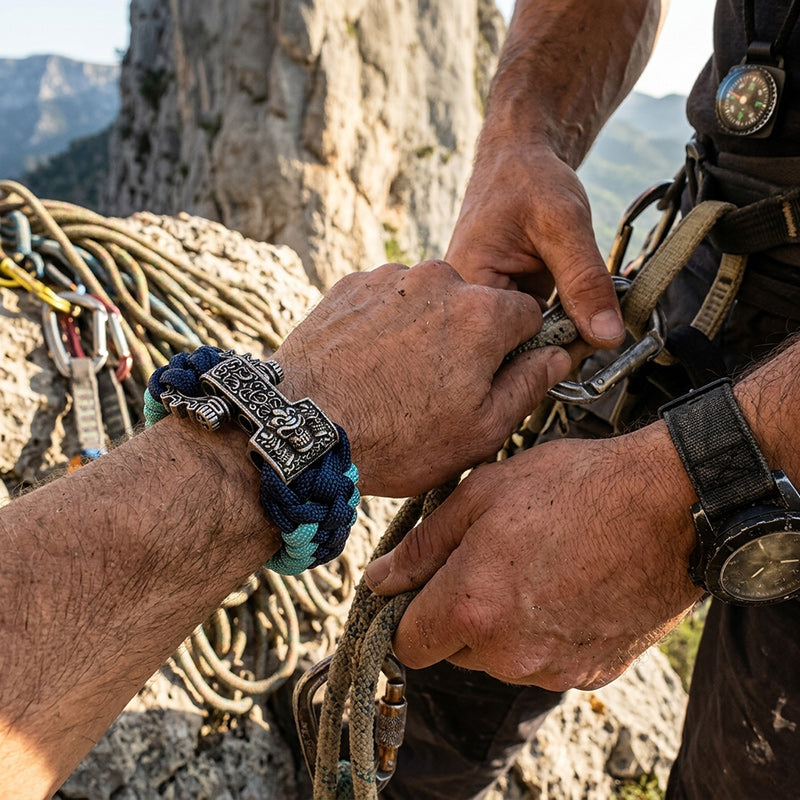
Handmade paracord bracelets cost more because they use genuine mil-spec 550 paracord, USA-sourced metal hardware, and demand hours of skilled hand-knotting that no factory machine can replicate. You’re not just buying a cord—you’re investing in a wearable survival tool built to last decades and possibly save your life. Sticker shock melts away once you understand what goes into each knot.
Key Takeaways
- Authentic 550 paracord and American-made hardware drive material costs, not cheap imports.
- Each bracelet reflects 30–90+ minutes of handcrafted labor—artisan time, not assembly-line seconds.
- Premium bracelets actually unknot into reliable emergency rope, unlike fakes that fail under load.
- You’re paying for durability, safety, custom style, and supporting small-batch American craftsmanship.
- Think of it like a bespoke leather wallet or a hand-forged knife: value beyond the raw materials.
What Is a Handcrafted Paracord Bracelet?
A paracord bracelet is a length of nylon parachute cord woven into a wear-friendly band, typically fastening with a buckle or clasp. The term “handcrafted” means a skilled artisan constructs it manually—no robotic jigs or overseas sweatshops. In the US, reputable makers like BoySouls use genuine Type III 550 cord, which has a minimum breaking strength of 550 pounds and contains 7 inner strands that can be stripped out for fishing line, thread, or snares.
Here’s the shortcut: if it’s not hand-tied, it’s probably not easily unraveled in an emergency. Mass-produced bracelets often glue or heat-fuse the weave, destroying the survival function. A real handmade bracelet is both jewelry and a piece of preparedness gear.
Why It Matters—More Than Just a Fashion Statement
When you buy a $5 bracelet from a big-box store, you’re getting polyester clothesline cord with a plastic buckle that snaps under 50 pounds. It looks the part but fails exactly when you need it. A premium handcrafted bracelet bridges the gap between everyday style and real-world readiness. For hikers, campers, motorcyclists, or anyone who wants one-handed access to 10–20 feet of strong rope, this matters.
American culture celebrates self-reliance. A well-made paracord bracelet isn’t a gimmick—it’s a quiet statement that you value preparedness without sacrificing looks. Just like a Swiss Army knife or a good pair of boots, quality upfront saves money (and grief) down the trail.
Why Are Handcrafted Paracord Bracelets More Expensive? 5 Factors That Define the Price
1. Material Quality: Real 550 Cord vs. Commercial-Grade Imposters
Authentic mil-spec 550 paracord is made in the USA from high-tenacity nylon, featuring a 7-strand core and a tightly woven outer sheath. It resists rot, mildew, UV rays, and abrasion. Cheap imports use polyester or recycled plastics that melt, fray, and contain fewer inner strands. BoySouls sources cord only from certified US mills—the same stuff issued to American troops. That cord alone can cost 5–10 times more per foot than bulk commercial cord.
Analogize it to leather: Full-grain, vegetable-tanned leather from Horween costs far more than bonded leather scraps. The raw material sets the ceiling on quality. With paracord, genuine 550 cord is the full-grain leather of the survival world.
2. Handcrafted Labor: The Hidden Hourly Cost
Weaving a simple bracelet might take 30 minutes for a experienced artisan; complex weaves like the fishtail or wide-mouth “cobra” can push 2 hours. Now factor in thorough quality checks, trimming, and melting the ends cleanly. The US minimum wage is a joke for skilled knotwork—artisans are often supported by a living wage or own small workshops. Compare this to mass production in offshore factories where 1,000 bracelets roll off a line in an hour. The time invested directly correlates to density, consistency, and the bracelet’s ability to hold its shape under tension.
Think of it like a hand-stitched baseball glove vs. a synthetic machine-pressed one. The handwork increases comfort, durability, and break-in feel. Your bracelet evolves with wear, not against it.
3. Premium Hardware: Metal Clasps, Custom Buckles, & USA-Made Findings
Guess where cheap plastic buckles come from? They crack in cold weather and deform in heat. Premium bracelets use stainless steel, brass, or copper clasps—often CNC-machined in the USA. Custom sculpted sliders (like BoySouls’ dragon, wolf, or bear motifs) require molds, casting, and finishing that add $5–$15 to the component cost alone. That’s before the artisan even touches the cord.
Again, compare to a luxury watch: the movement and case material define much of the price. A simple quartz movement in a plastic case vs. a Swiss automatic in 316L stainless steel. The bracelet’s clasp is its case—visible, functional, and central to durability.
4. Survival Integrity: It Has to Actually Work
A handmade bracelet from a reputable brand is designed to be unraveled in under 30 seconds, giving you a continuous length of cord with 7 usable inner strands. The knotting technique ensures the weave doesn’t permanently lock the cord; it can be undone without tools. Cheap bracelets often glue the ends or use “friction welds” that fuse the cord, rendering it useless for emergency. Testing this integrity takes time and expertise—each bracelet is usually test-pulled to verify the clasp and knots won’t fail. That’s liability-conscious craftsmanship, not a factory afterthought.
5. Customization, Small Batches, & No “Fast Fashion” Waste
Most American makers offer custom lengths, color combos, and personalized hardware. This isn’t a “pick your size from a bin” situation. Small-batch production avoids warehouse waste and allows artisans to iterate on design. That flexibility and exclusivity costs more than mass-produced uniformity. For the premium lifestyle buyer, knowing your bracelet is one of perhaps 50 made in that colorway is a value-add, not a flaw.
Handcrafted vs. Mass-Produced: A Side-by-Side Comparison
| Feature | Handcrafted (BoySouls Example) | Mass-Produced (Generic) |
|---|---|---|
| Core Material | Mil-spec 550 Type III nylon, USA-made | Unknown polyester or polypropylene, often Chinese-sourced |
| Inner Strand Count | 7 (usable for fishing, sewing, snaring) | 0–5, often non-continuous or glued |
| Buckle / Clasp | Stainless steel, brass, or copper; many custom sculpted | Injection-molded plastic, prone to breakage |
| Crafting Time | 30–120 minutes per bracelet | ~2–5 minutes by machine |
| Emergency Unravel | Designed to unravel quickly; cord intact | Often glued or fused; may not unravel at all |
| Price Range | $35–$85+ | $5–$15 |
| Lifespan | Years, with care; can survive harsh environments | Months before fraying or fading significantly |
| Made In | USA (with transparent sourcing) | Typically China, Vietnam, or Pakistan |
Real-Life Scenarios Where Premium Pays Off
1. Deserted Trail Dilemma: You’re solo hiking a remote Arizona trail when your bootlace snaps. A $5 bracelet’s inner strands are too short to replace it. A BoySouls bracelet unknots to give you 15 feet of cord, enough to fashion a replacement lace and still have cordage left to tie a sling if needed.
2. Vehicle Emergency: Your car’s skid plate drags after hitting a rock on a forest service road. Standard bungees are buried under gear. You unravel your bracelet, lash the plate up, and drive to a service station. The cord holds because it’s genuine 550—not a cheap imitation that snaps on the first bump.
3. Everyday Carry (EDC) Utility: A sharp-dressed man in a boardroom might not need survival cord, but he appreciates that his brass-clasped bracelet can secure a broken briefcase strap or act as a makeshift tourniquet. Premium hardware means it won’t tarnish or corrode from sweat.
These are not far-fetched. The value lies in knowing you have options. When life throws a curve, your premium bracelet becomes the most understated hero on your wrist.
Buying Guide: How to Spot a Truly Valuable Handcrafted Paracord Bracelet
- Certification or Transparency: The maker should state “mil-spec 550 Type III” and ideally name their cord source. If the description says “parachute cord” without specification, be skeptical.
- 7 Inner Strands: Ask or look for pictures of cut cord ends showing the 7 inner yarns. If they can’t show it, they might be hiding something.
- Metal Hardware Options: Quality brands offer stainless steel, brass, or copper. Avoid anything predominantly plastic if you plan to rely on it.
- Weave Density & Knot Consistency: Handmade should mean zero gaps, even tension, and symmetrical patterns. Sloppy wraps indicate rushed labor.
- Unravel-ability Guarantee: Reputable sellers will promise the bracelet can be disassembled into usable cord. BoySouls even includes instructions and a practice video.
- Lifetime Warranty or Repair Policy: A premium price should be backed by standing behind the product. Look for “if it breaks, we fix or replace.”
- Made in USA: Ensures fair labor and adherence to quality standards. It’s a short-hand for accountability.
Care Tips: Making Your Investment Last
Handcrafted paracord is tough, but a few habits maximize lifespan:
- Clean with mild soap and a soft brush; rinse thoroughly and air dry away from direct heat. Do not put it in a dryer.
- Avoid prolonged exposure to petrol, DEET-heavy repellents, or harsh solvents—they can weaken nylon.
- Store out of direct sunlight for long periods to prevent UV degradation. When wearing daily, this isn’t an issue.
- Inspect the clasp and cord periodically for fraying. A high-quality bracelet should last years of active use with minimal wear.
Frequently Asked Questions
Why are some paracord bracelets $50 and others only $5?
The $5 version uses cheap commercial cord with fewer inner strands, plastic buckles, and machine assembly that often glues the weave. The $50+ bracelet uses authentic mil-spec 550 cord, metal hardware, and is handcrafted to function as emergency rope, not just a prop.
Is mil-spec 550 paracord really that much stronger?
Yes. True 550 cord holds a minimum 550 lbs in static load testing—more than enough to tow a small ATV or support an adult’s weight in a pinch. Imitation cord can fail below 100 lbs, making it useless for critical tasks.
Can I wear my premium bracelet every day without damaging it?
Absolutely. Quality nylon and stainless hardware resist sweat, ocean water, and daily abrasion. Many users never take them off. Just rinse after saltwater exposure to extend the life of the metal components.
Are custom-designed bracelets worth the extra cost?
If you value unique style or want a clasp that symbolizes something meaningful (bear for strength, dragon for resilience), the extra cost reflects the casting and finishing of that custom hardware. It’s like buying a limited-edition pocket knife—you pay for the artistry.
How do I know it will unravel in a real emergency?
Reputable brands explicitly design the weave to be undone from a specific starting point, often marked or intuitive. BoySouls bracelets include a card and online video to practice. Test it once yourself so you know it works; then you can re-weave it or have it reset.
Do handmade bracelets come in different lengths?
Yes, most artisans offer made-to-measure. You provide your wrist size, and they adjust the weave to fit exactly. That’s impossible with a $5 one-size-fits-none product.
Who Should Buy a Premium Handcrafted Paracord Bracelet?
- Outdoor Enthusiasts: Hikers, campers, hunters, and anglers who understand the value of multi-use gear.
- Everyday Carry (EDC) Crowd: Men who like functional accessories that blend into style-conscious workplaces.
- Survivalists & Preppers: Those who take redundancy seriously and want wearable cordage within arm’s reach 24/7.
- Gift Shoppers: A handcrafted bracelet makes a memorable, long-lasting present for a brother, dad, or friend who seems to have everything—especially with a symbolic clasp.
- Anyone Tired of Disposable Fashion: If you’ve thrown away three cheap bracelets this year, step up to one that outlasts them all.
Conclusion: The Price Is Forgotten Long After the Quality Remains
We get it—plunking down $50+ for what looks like a woven nylon band can feel absurd at first. But when you peel back the layers: US-made 550 cord, rugged metal hardware designed not to fail, and hours of meticulous artisan time, the math adds up. You’re not paying for hype; you’re paying for a piece of functional jewelry that could literally save your hide one day. Like a solid pocket knife or a well-built leather belt, a premium paracord bracelet rewards you every single day with reliability, comfort, and understated style.
If you’re ready to wear gear that matches your lifestyle—adventurous, prepared, and a little bit untamed—explore the BoySouls collection. Each bracelet is handcrafted in the USA to meet the highest standards, and we back them unconditionally. Because your wrist deserves better than a plastic imitation. See the handcrafted difference
Still have questions about what makes a bracelet worth the investment? Reach out—our team is happy to talk cordage, clasps, and everything in between.
Share:
Why Premium Paracord Survival Bracelets Are Worth the Price: Craft, Labor, and Real Value in 2026
The True Cost of a Premium Paracord Bracelet (And Why It’s Worth Every Cent)